
On Sunday, we began the traveling portion of the semester, beginning with Kumasi. We will be here until Thursday when we will go to our home-stay in the village (the village is a term used to refer to the most rural areas of Ghana). Yesterday, we had the opportunity to go to Bonwire, a town/village that is about 30 minutes outside of Kumasi. Bonwire is a weaving village, where almost everyone knows and weaves Kente cloth (the most skilled weavers in Bonwire traditionally wove cloth for the Asantehene). Kente cloth is a traditional Ghanaian cloth originating from the Ashanti people that is woven in different designs and colors. Each print has a different meaning and can convey messages for those who know how to read it. Although this cloth is traditional and is a staple “African fabric” (parentheses because often we get Ankara fabric with Kente patterns printed on them but not actual kente) for those in the diaspora, the cloth actually isn’t as traditional as I thought.
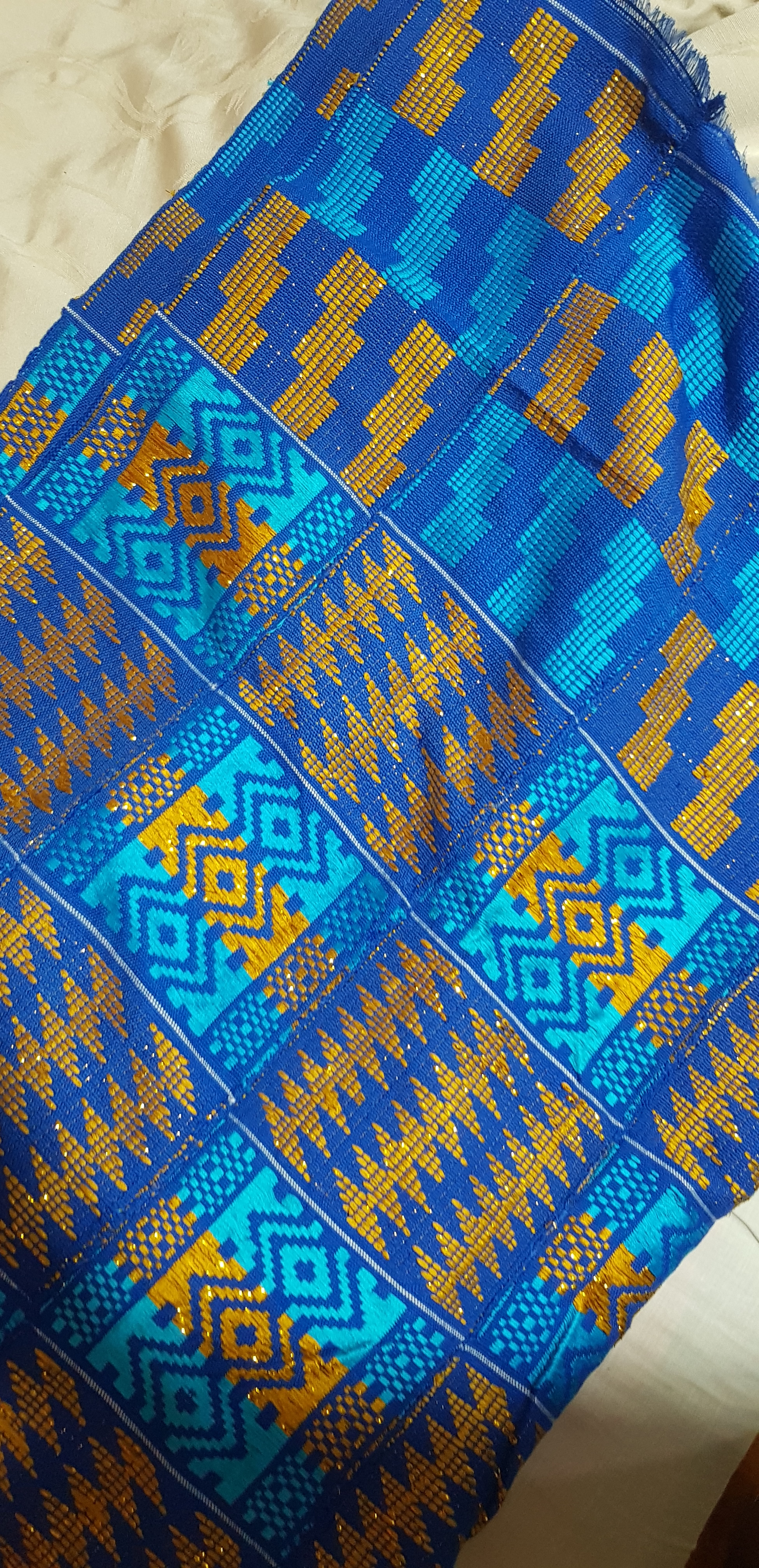
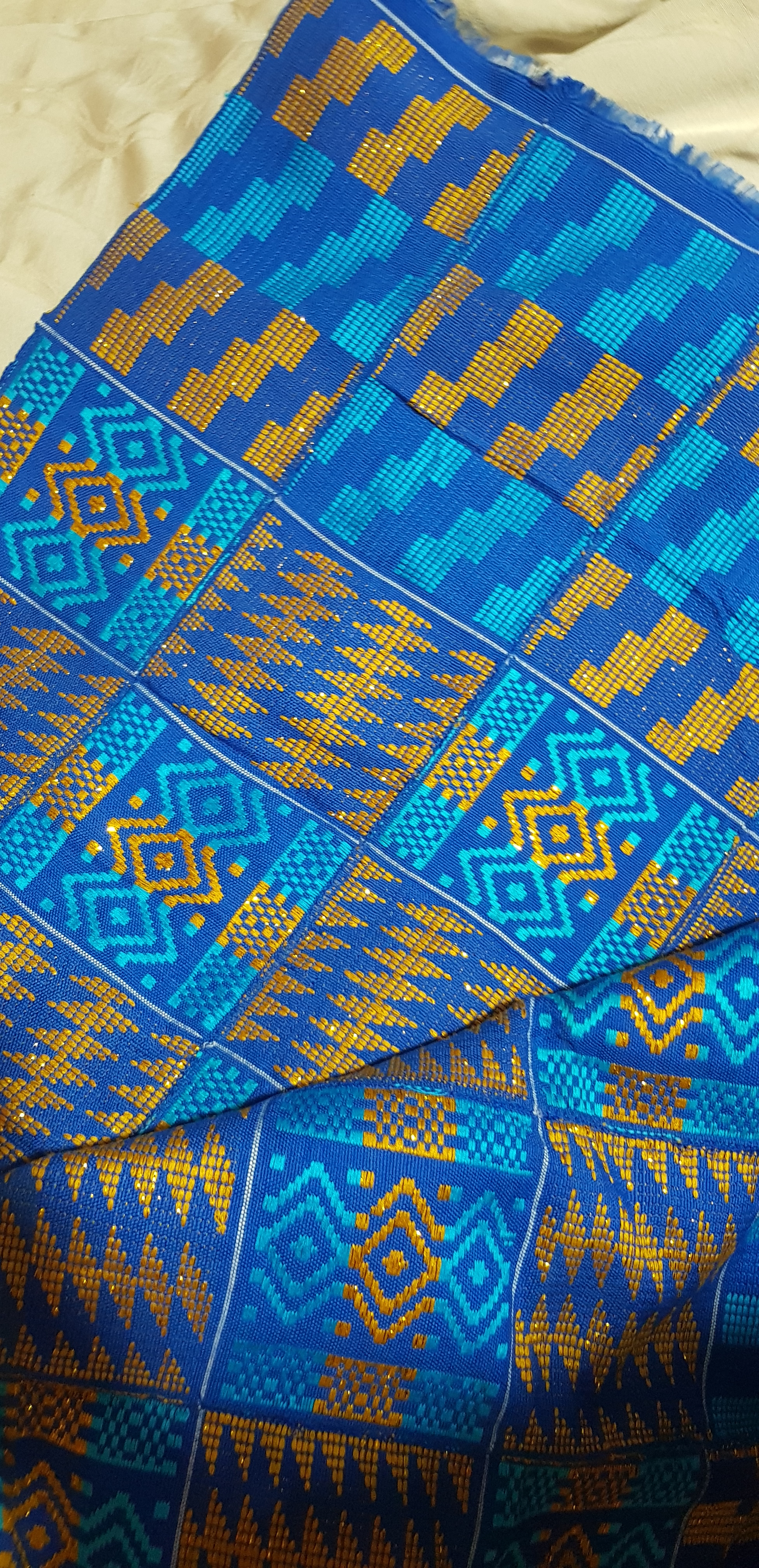
According to the weavers of Bonwire, the practice of weaving began with two hunters observing a spider. They began by weaving baskets began weaving cloth once they began trading with Europe and obtained silk thread (They now use Chinese polyester thread). I find that interesting. Although it was still a long time ago, with how staple the cloth is I thought it would have been something that preceeded European interaction but it makes sense. Apparently they used to wear animal skins before. When making the cloth, weavers weave patterns in strips and then sew them together to make the cloth. Depending on the weaving style (single weave up to triple weave), the designs can range from very simple to very complex. After observing someone weave, we had the opportunity to buy kente and kente products directly from people. Among other products I bought 2 yards of triple woven blue Kente with gold embellishments. With the help of Mavis, one of the native Ghanaians in our class and arguably my best friend on the trip, I was able to haggle it down to 200 Cedis (which is a serious bargain for triple woven kente. Out of all of the Kente I saw, that one drew my eye the most. Unfortunately, I forgot to ask what the pattern meant at the time; however, today when I went to the Mankyia Palace, I was able to ask the tour guide who fortunately knew the meanings and names of different Kente designs. [The old palace of the Asantehene, bought by the Ashanti from the the British (originally a gift from the British) during colonization and has been converted to museum]. He said that it means “the royals” or “the royal crown” which is pretty cool since I picked it without knowing the meaning. Now I am just wondering what to have made with it

 Denkyem
This is beautiful. Great job haggling the price. Haggling is my favorite sport. That will be an amazing memento from your experience and I love that you learned the history of that specific design as well.
LikeLike