
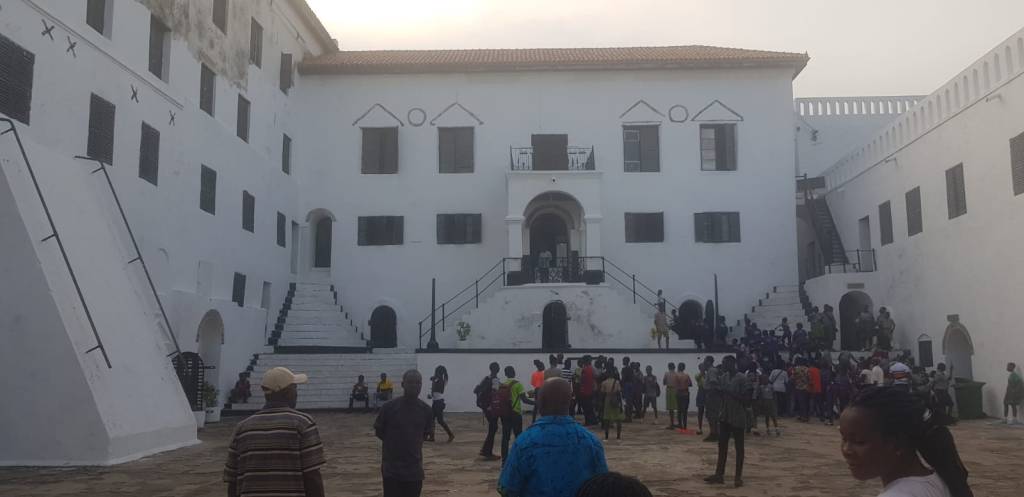
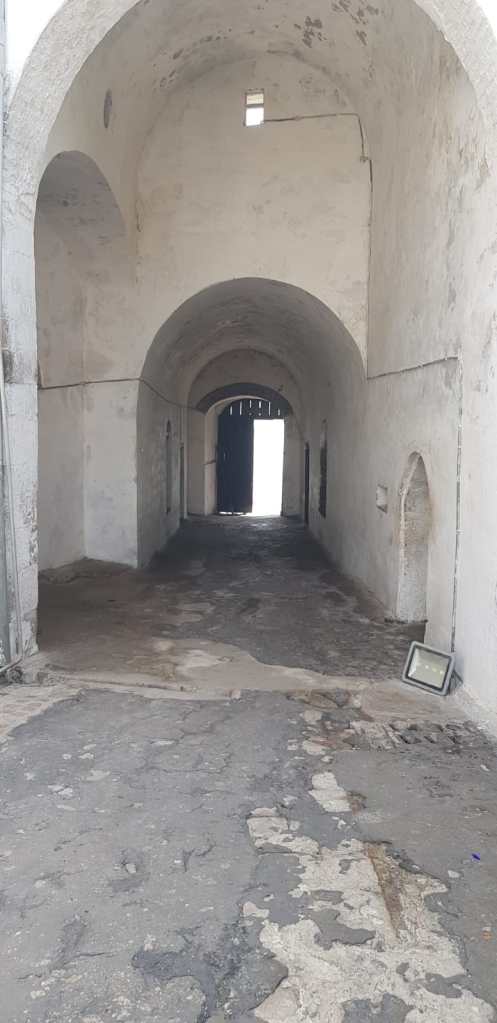
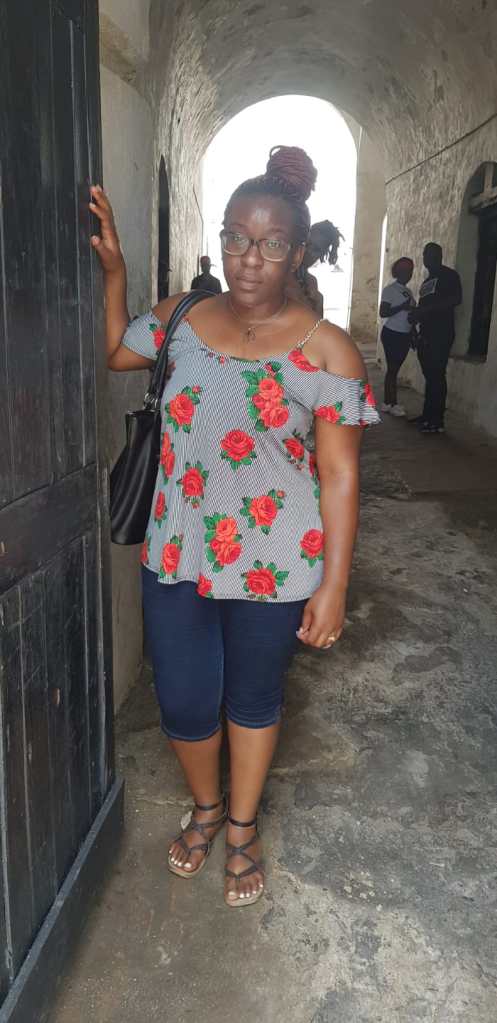
On Friday, we went to Elmina Castle. We got the opportunity to tour the castle including seeing the dungeon where enslaved people were kept. It is ironic because in Elmina, the Portuguese church was right outside of the male dungeons and right in the center of where they were brought out to move and get air. The dutch church was right above the female dungeons. How can one call them self a Christian or even go to church with the cries of stolen, chained, and abused people all around them, dying everyday? The original plan was to go to both Elmina Castle and Cape Coast Castle and leave on Sunday but since Spelman University and Virginia Wesleyan University were mandating Avy and I (respectively) to return to the US it was decided to go back to Accra on Saturday so we could take care of any business we needed to take care of before we left. Despite this, I woke up early Saturday morning to go to Cape Coast Castle on my own.
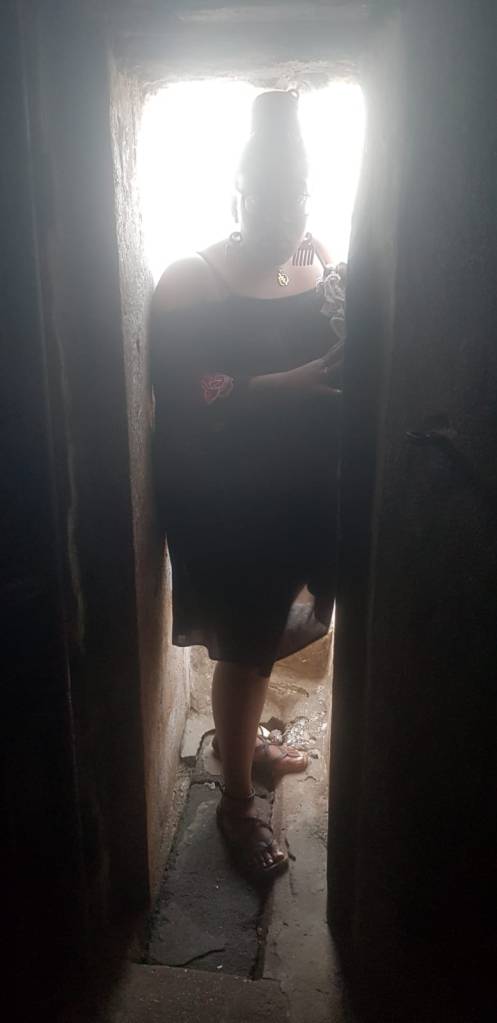
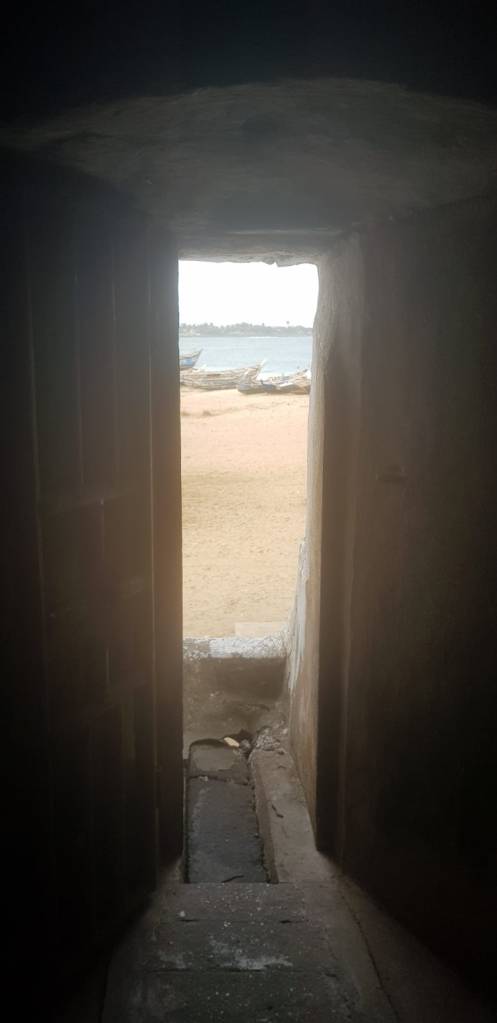
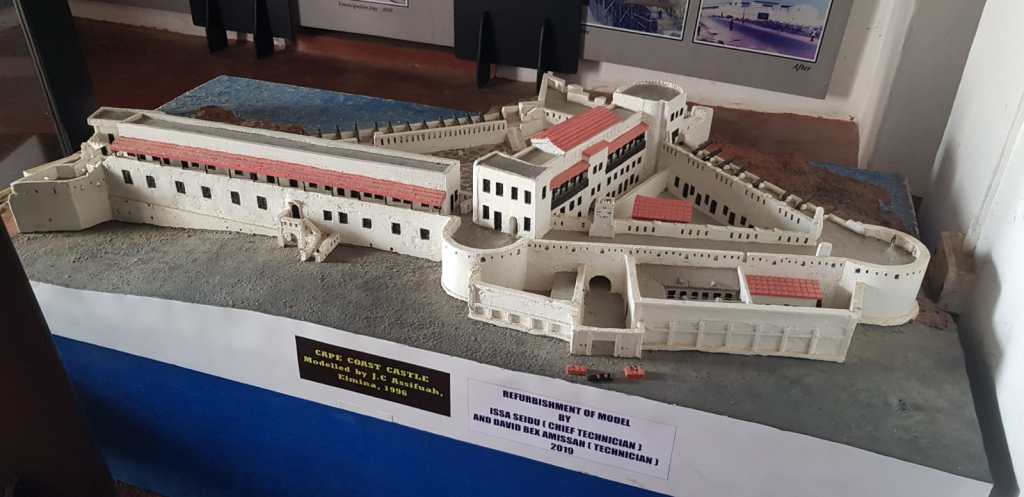
This castle was held by the British (meaning it is more likely I had ancestors that passed through there as Jamaica was a British colony when slavery was at its height there) and held more enslaved people than Elmina (also increasing the likelyhood of my ancestors passing through there). Because our tour began late and we were heading for Accra at 11AM, I was unable to complete the tour (leaving after going through the door of no return) and felt rushed, hence not allowing me to fully take in the castle and feel the emotions going through my head. However, this tour was much more descriptive of the conditions of enslaved people (and to me their dungeons were much worse than Elmina) and what really struck was that I mentally could not picture what the tour guide was saying. 200 men were kept in one of the male holding cells (which were probably smaller than an upstairs Clarke classroom) more than ankles deep in feces and vomit (the women also had period blood). In fact, in the last excavated men holding cell, the floor we walked on was oxidized feces and vomit over centuries. My mind was processing it but I couldn’t picture it. No matter how I tried, I could not see 200 people in the cell which is just a testament to how extreme things were. The average waiting time to be sent in the middle passage was 2 weeks to 3 months. 3 months of hell before enduring even more hell. Although I wasn’t able to fully take in my castle experiences for various reasons, I was able to go through the “door of no return” for both castles, which is extremely important to me.
My experiences this week and me traveling to Ghana as a whole has meant a lot to me. Often times when we talk about slavery it is from the middle passage and beyond, which even their conditioning upon arrival is barely talked about. I never had the liberty to really understand their struggle on the African continent before the Americas. Merely making it to the boat was hell and many did not make it. Imagine not only making it through this but also surviving the middle passage, conditioning/seasoning, and slavery long enough to produce another generation. Life expectancy among enslaved people brought from Africa was 7-9 years overall (Jamaica would be on the lower end as sugar cane plantation life is much more tasking than the of a cotton or tobacco plantation). I come from a strong lineage, that was able to survive all of this, and I will never take that for granted. Now through my journey to Ghana, although it took many generations, my ancestors and lineage have a path to return where they belong and truly rest in perfect peace.
 Denkyem