Yɛbɛhyia bio

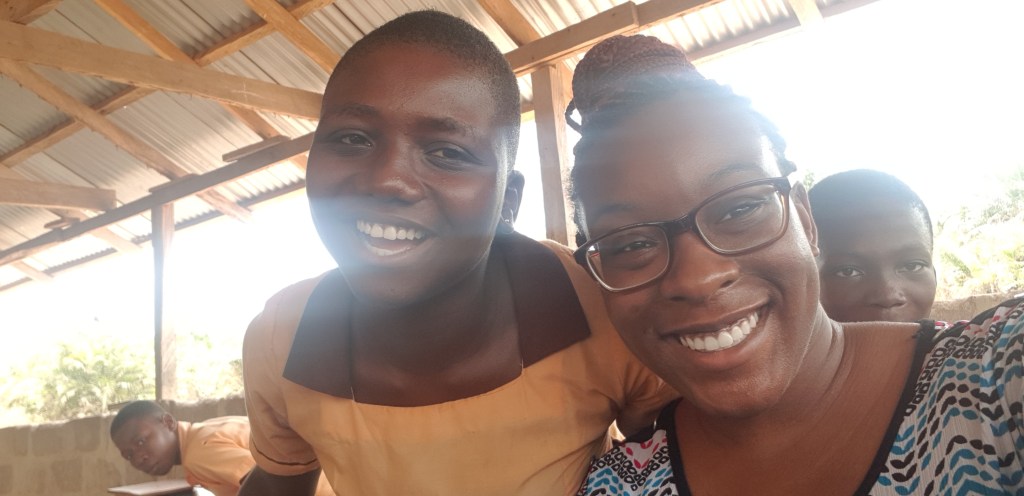
So I have officially been told I need to return to the US due to the Coronavirus pandemic worldwide. I leave tonight. Overall I have loved it here. I have had so many interesting experiences and made many new friends. My classmates and I have become a small family honestly. I love how the experiences here have been new yet familiar and I have been able to make many connections to Jamaica while here. I had so many plans for the rest of the semester. It is with a heavy heart that I leave Ghana but one day I hope to come back and finish where I left off. For now, yɛbɛhyia bio!

Bra Fie: Part 2

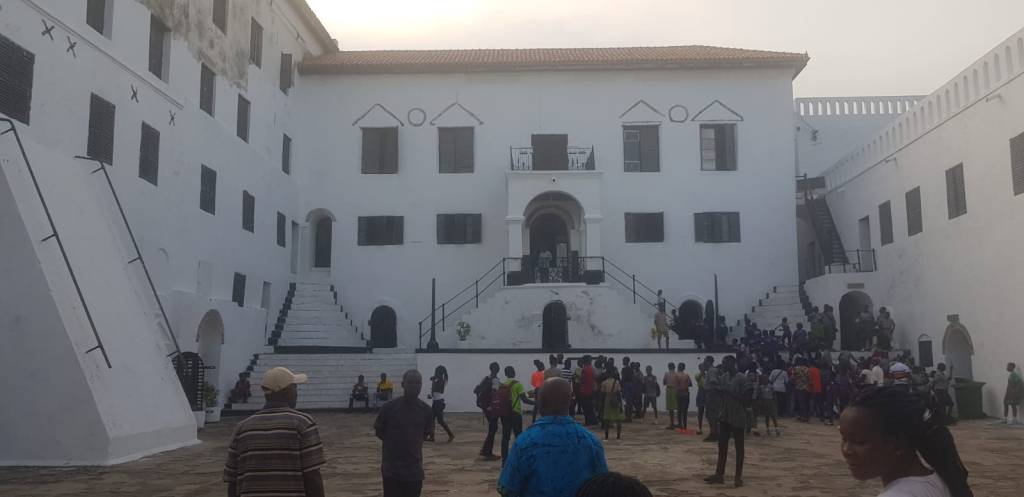
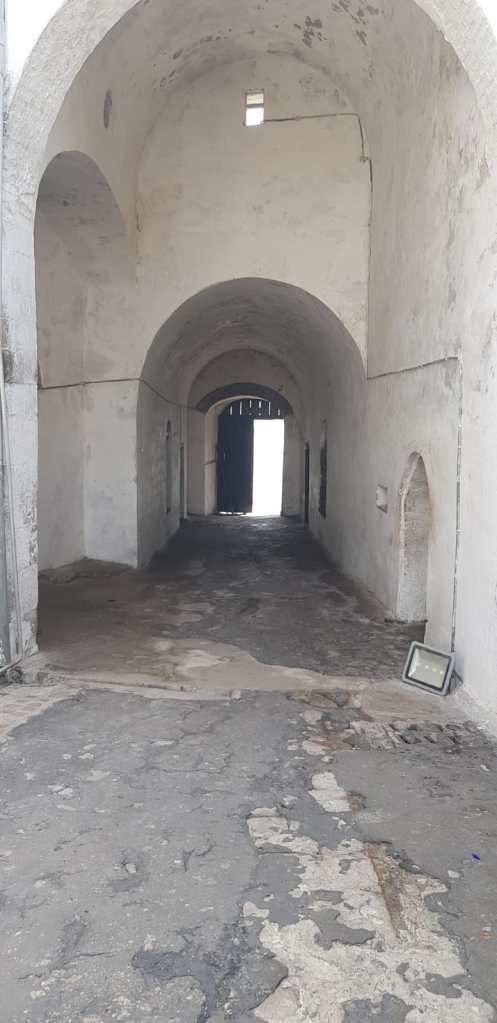
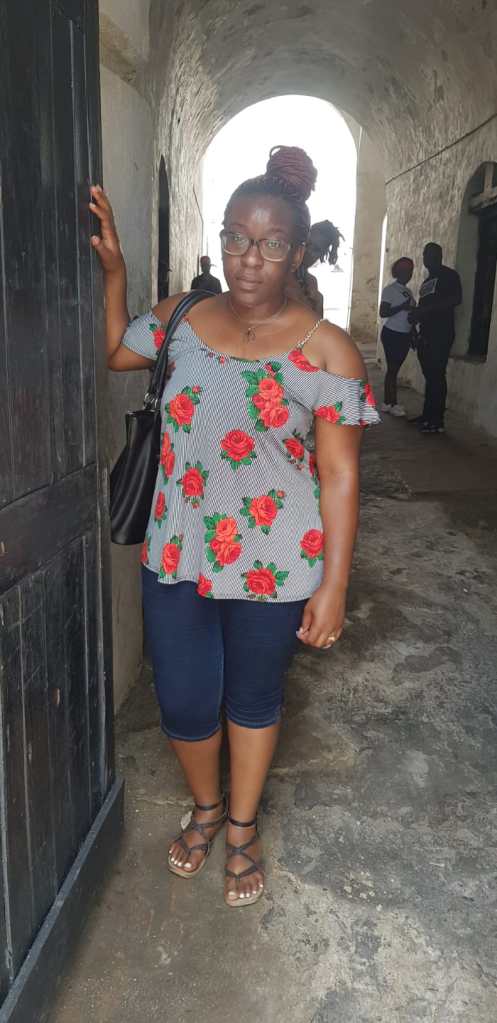
On Friday, we went to Elmina Castle. We got the opportunity to tour the castle including seeing the dungeon where enslaved people were kept. It is ironic because in Elmina, the Portuguese church was right outside of the male dungeons and right in the center of where they were brought out to move and get air. The dutch church was right above the female dungeons. How can one call them self a Christian or even go to church with the cries of stolen, chained, and abused people all around them, dying everyday? The original plan was to go to both Elmina Castle and Cape Coast Castle and leave on Sunday but since Spelman University and Virginia Wesleyan University were mandating Avy and I (respectively) to return to the US it was decided to go back to Accra on Saturday so we could take care of any business we needed to take care of before we left. Despite this, I woke up early Saturday morning to go to Cape Coast Castle on my own.

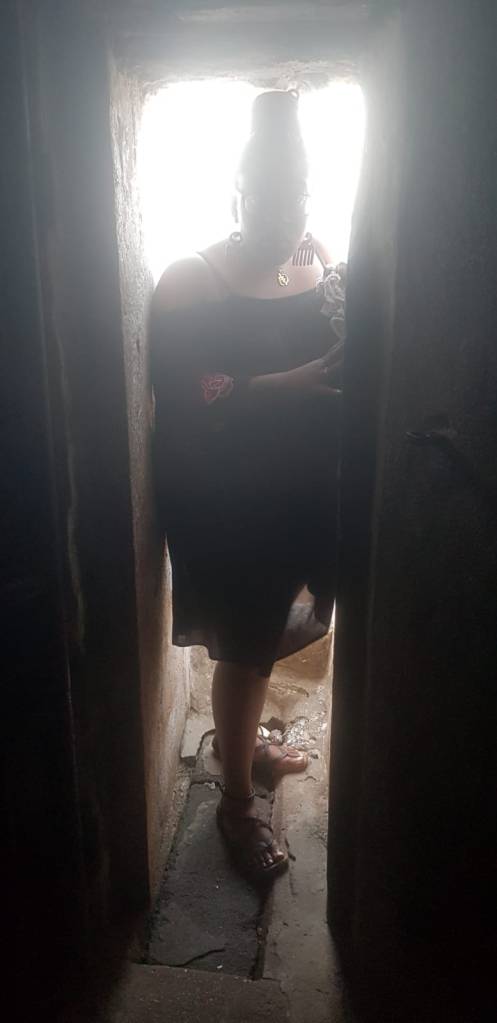
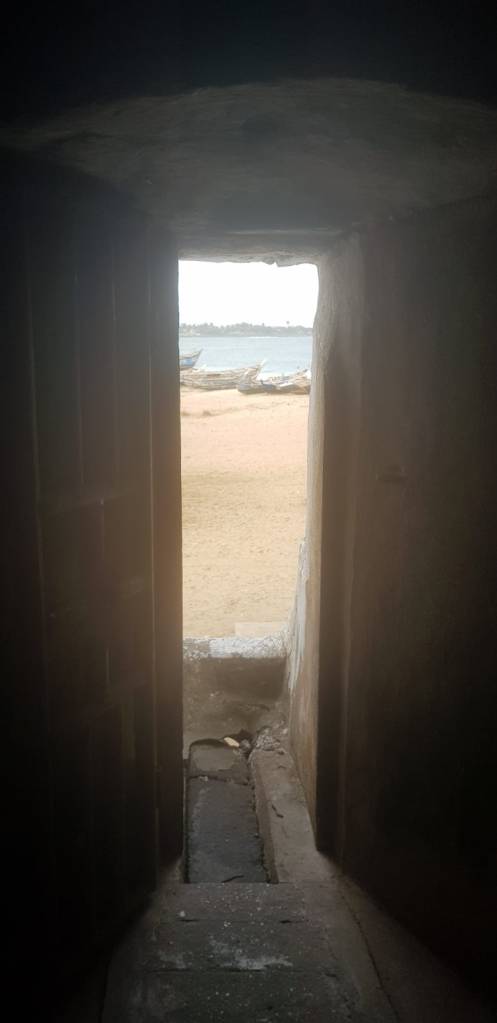
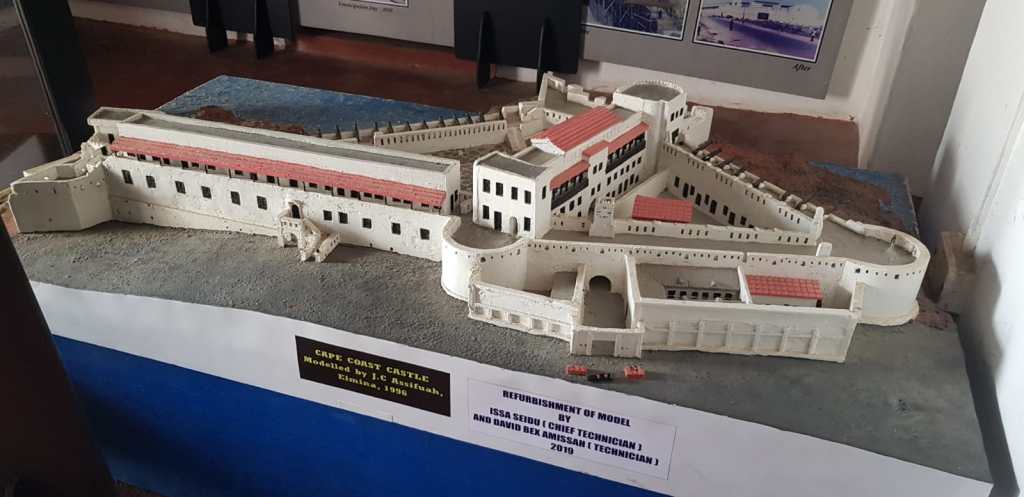
This castle was held by the British (meaning it is more likely I had ancestors that passed through there as Jamaica was a British colony when slavery was at its height there) and held more enslaved people than Elmina (also increasing the likelyhood of my ancestors passing through there). Because our tour began late and we were heading for Accra at 11AM, I was unable to complete the tour (leaving after going through the door of no return) and felt rushed, hence not allowing me to fully take in the castle and feel the emotions going through my head. However, this tour was much more descriptive of the conditions of enslaved people (and to me their dungeons were much worse than Elmina) and what really struck was that I mentally could not picture what the tour guide was saying. 200 men were kept in one of the male holding cells (which were probably smaller than an upstairs Clarke classroom) more than ankles deep in feces and vomit (the women also had period blood). In fact, in the last excavated men holding cell, the floor we walked on was oxidized feces and vomit over centuries. My mind was processing it but I couldn’t picture it. No matter how I tried, I could not see 200 people in the cell which is just a testament to how extreme things were. The average waiting time to be sent in the middle passage was 2 weeks to 3 months. 3 months of hell before enduring even more hell. Although I wasn’t able to fully take in my castle experiences for various reasons, I was able to go through the “door of no return” for both castles, which is extremely important to me.

My experiences this week and me traveling to Ghana as a whole has meant a lot to me. Often times when we talk about slavery it is from the middle passage and beyond, which even their conditioning upon arrival is barely talked about. I never had the liberty to really understand their struggle on the African continent before the Americas. Merely making it to the boat was hell and many did not make it. Imagine not only making it through this but also surviving the middle passage, conditioning/seasoning, and slavery long enough to produce another generation. Life expectancy among enslaved people brought from Africa was 7-9 years overall (Jamaica would be on the lower end as sugar cane plantation life is much more tasking than the of a cotton or tobacco plantation). I come from a strong lineage, that was able to survive all of this, and I will never take that for granted. Now through my journey to Ghana, although it took many generations, my ancestors and lineage have a path to return where they belong and truly rest in perfect peace.

Bra Fie: Part 1

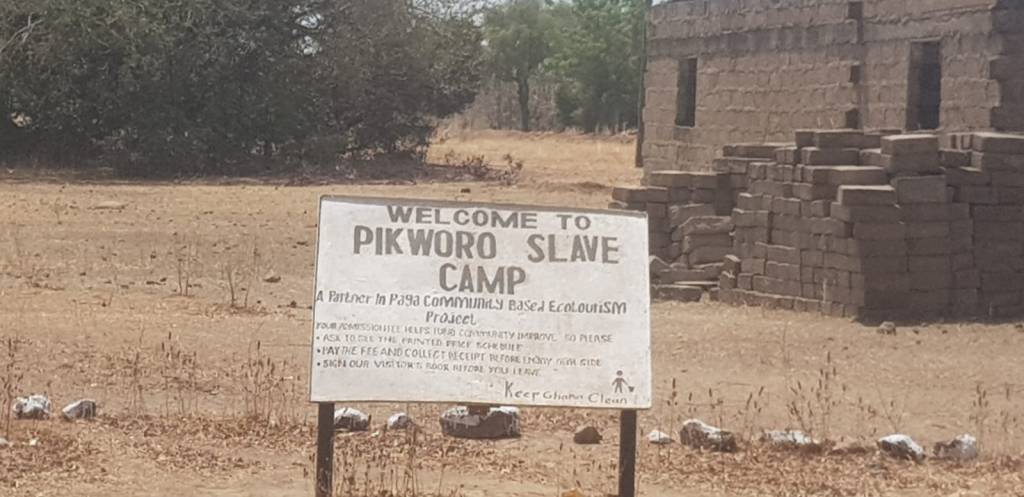
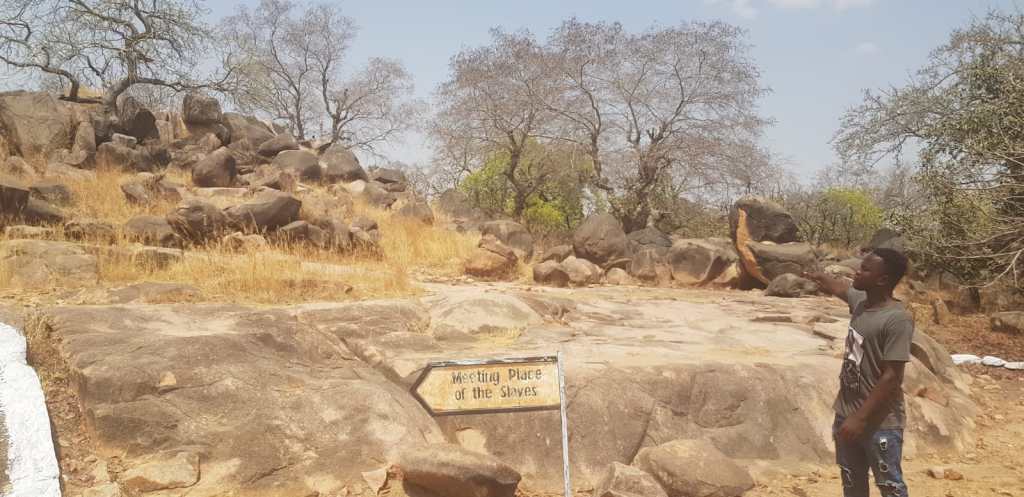
This week began a very important part of semester abroad in Ghana. We are stopping at different points along a slave route from the northernmost point of Ghana all the way to the castles at the Southern coast. We started at the Pikworo Slave Camp at Paga. Paga is right at the border of Ghana and Burkina Faso. Enslaved people would be brought from as far as Mali to this point. They only ate once a day and had little food and water. Groups of people would try to free the people kept there but often times were defeated and enslaved as well. We were taken to see where the enslaved people ate, made their food, got their water from, were sold, and punished. We also saw where the overseer would keep a lookout for runaways and intruders as well as a place where enslaved people would dance and make music on rocks.

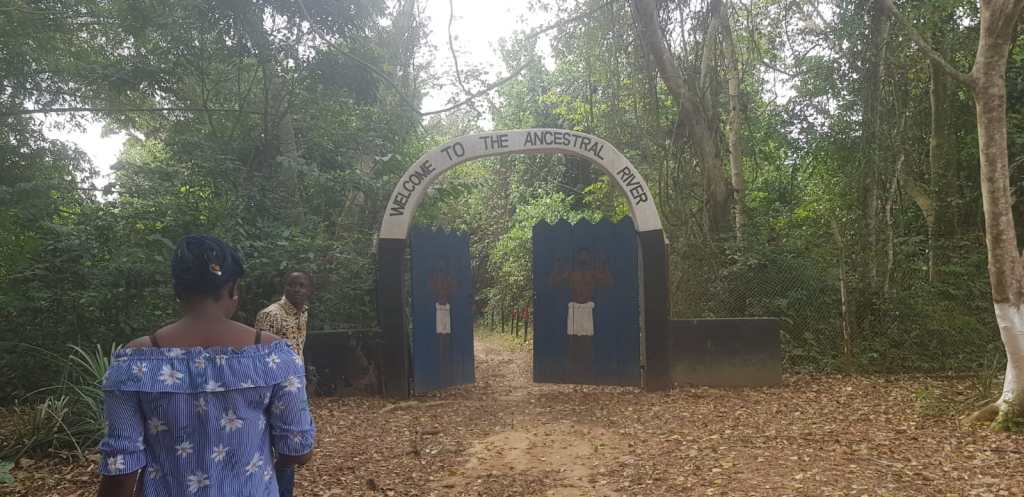
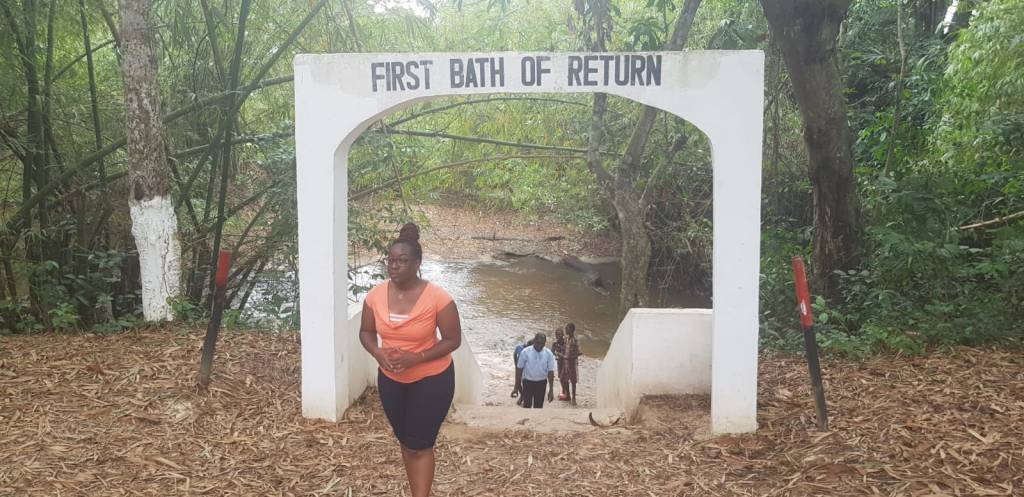
The day after Pikworo Slave Camp, we went to Mole National Park where I got to see elephants, monkeys, warthogs, and antelope. The next day, on our way to Cape Coast, we stopped at Assin Manso Ancestral Slave River Park. This was where enslaved people had their last bath before reaching the castle. It took us two days to drive there from Damango (further South from Paga), enslaved people would have to walk in chains. It took them 90 days to get there from Paga (some were coming from as far as Mali remember). Additionally, to get past modern day Mole National Park (where the wild animals were), the slaver would choose the weakest among the group, beat them bloody, and tie them to a tree. When the animals came to feast on the person, the rest of the group would move along. Hearing this information really made me somber. Along the walls of Assin Manso Park are different prominent figures in Black liberation, most notably to me were Nanny of the Maroons and Marcus Mosiah Garvey, two of Jamaica’s national heros. Before going to the river he actually told the story of Nanny and her role in liberating enslaved people, setting up Maroon towns and and the Maroon wars with the British. I already knew her story but hearing it in Ghana where she came from (she was taken from Ashanti region) was somewhat surreal.

On our way to the to the river itself, we were urged to remove our shoes as we were going to ancestral grounds. I do not like walking barefoot at all but I felt compelled to do so, after all my ancestors did not have shoes and were in chains. When we got to the river, the tour guide explained how enslaved people were bathed. Groups would be walked into the river with a cannon ball at one end as an anchor. Pieces of the bamboo around would be used to scrub the enslaved people. This was quite rough and sometimes removed skin. After the bath, they were oiled up to look more attractive and were sold right in front of the river. Often times they would be branded for the first time at this point as well. Those waiting to be bathed were tied back to back to a tree with a lot of thorns so nobody would try to escape.

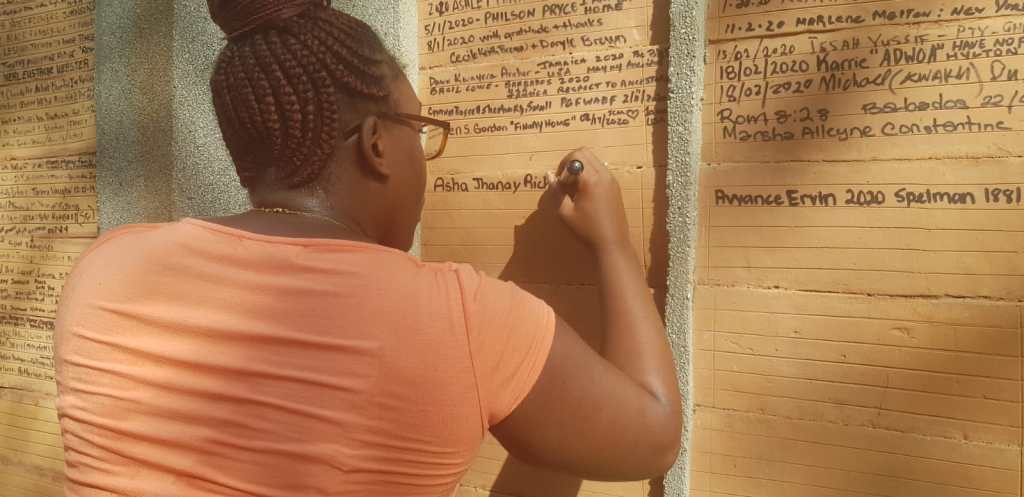
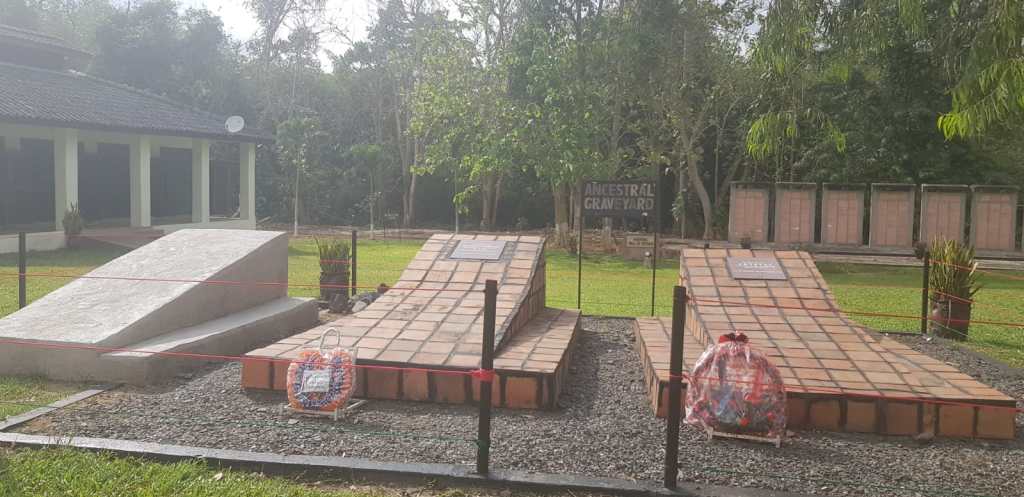
When we went down to the river, it became overcast. I went into the Slave River and had a moment of silence; after which, I washed my feet, hands, and face. I don’t know if it was just me but the river smelled very odd once I got in it. It smelled like something died. At the bottom of the river, there was gold dust. Something in me told me to reach into the river. I picked up a very small stone, it was clear and shiny. We then walked back to where we started at the ancestral grave site. This is where they buried 2 enslaved people (one unknown enslaved person from a mass grave in Barbados and Crystal from Jamaica) and Samuel Carson, an African American Navy seaman killed in the Mexican-American war. The first two, Crystal and Samuel, were brought to Assin Manso on Ghana’s first celebration of emancipation day in 1999 (Apparently, the Prime Minister at the time was in Jamaica and witnessed our emancipation day celebration. He was so moved that he decided to start celebrating emancipation day in Ghana as well). The one that stuck out to me was Crystal. She was an enslaved person stolen from the Ashanti region and brought to Jamaica. While in Jamaica, she went on hunger strike. Her teeth were bashed in and she was force fed up until emancipation. She decided to continue her hunger strike for those who were still in bondage and died a few months later. As the tour guide was telling the story of Crystal, it became bright outside again. Lastly we were taken to the wall of return. According to the tour guide, in Akan tradition, our spirits and that of our ancestors are tied to our names. Even though we no longer have our day names (mine is Yaa), we have been gone so long that our spirits are tied to our new names. by writing our names on the wall, our ancestors have an avenue to return to their homeland. I signed my name and date on the wall. Shortly, after it started raining (with the sun still out and shining). This might have been coincidence but my spirit felt at peace that day. Upon leaving Assin Manso, the song By the Rivers of Babylon kept playing in my head.

Tonight, Avy and I were mandated by our schools to return home due to Coronavirus. We decided to go to the beach that night as a final fun group outing/get together before we made plans to leave as we have become somewhat of a close knit family. We ended up at the beach adjacent to Cape Coast Castle, my ancestors last point before leaving Africa forever. A bit under the influence of alcohol, I wrote “ASHA JHANAY RICHARDS (YAA) WAS HERE)” into the sand for the tide to wash away and carry the message to my dead ancestors in Jamaica. Through my name on the sand, in that specific location, they can return to the same point they left.

Transportation in Tamale

On Thursday, we left Patakro and the Ashanti region and headed to Tamale in the Northern Region which was a 7 hour bus ride. On the way, it was clear to see that the environment and society was different. In the South (Accra, Kumasi and most of the other areas we had been to previously) I had seen some Muslim communities; however, very few mosques. Instead, there were mega churches and billboards about church services and special sermons. Along the way to Tamale, churches started to give way to mosques. Also modes of transportation changed.
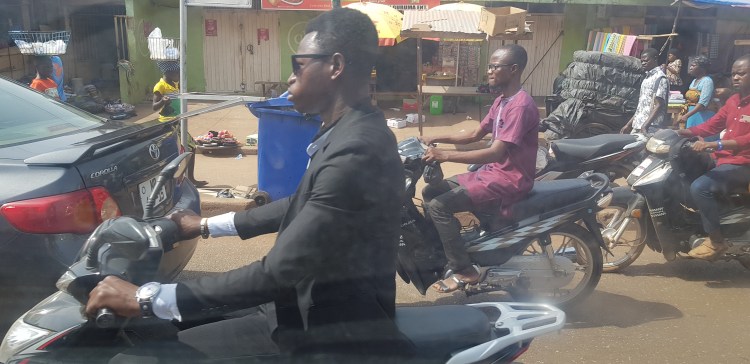
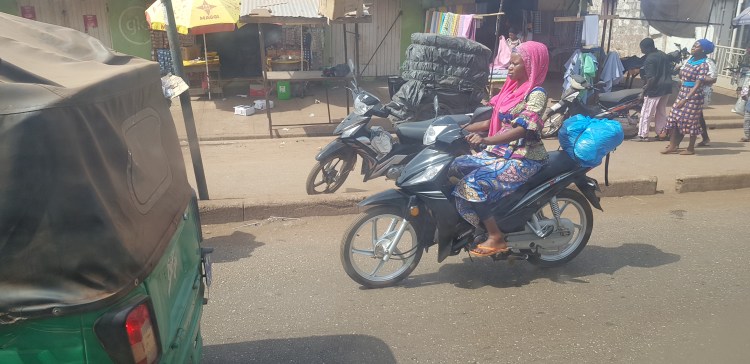
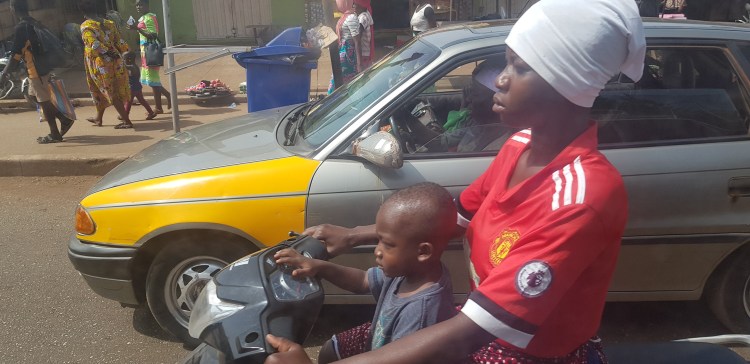
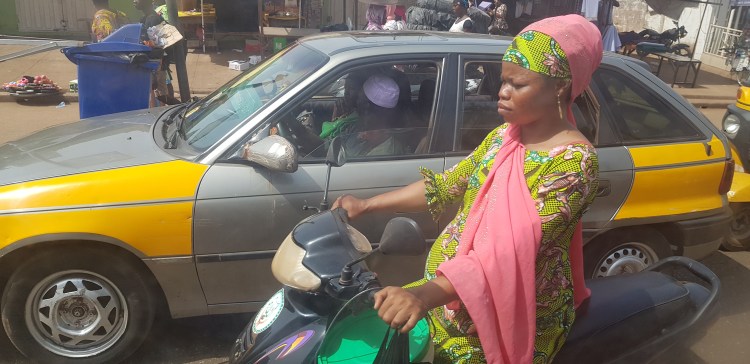
In Tamale, there are no Tro-Tros and there are a lot more motorcycles (which are personal and taxis). One thing I found pretty interesting is that here, women ride motorcycles just as much as men (not as in riding in the back but actually driving them). There was one that I saw riding with a child in the front and two in the back. This is surprising for two reasons. Firstly, almost everywhere else I have been in Ghana and Jamaica, women don’t ride (as in drive) motorcycles. Even in the US it is uncommon to see women riding motorcycles. Secondly, it is something I didn’t really expect considering Tamale is a predominantly Muslim city. In fact many of the women I see are wearing Hijabs. Take that in contrast to Saudi Arabia where women were just recently allowed to drive (with a man’s permission). It is a good thing.
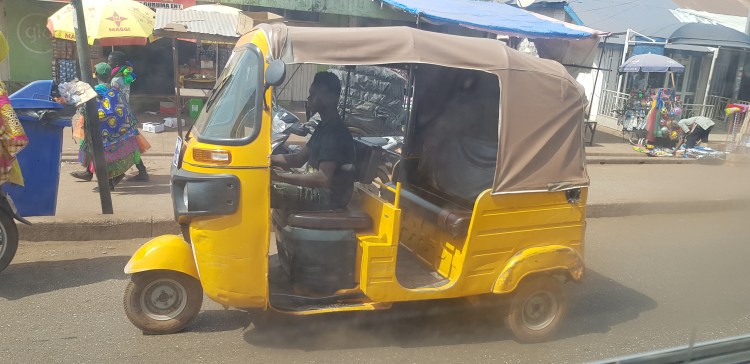
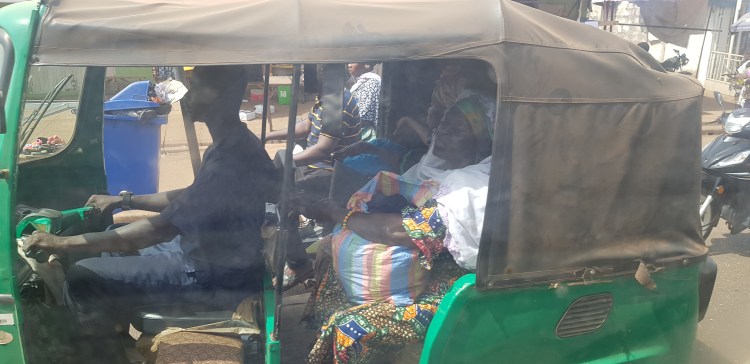
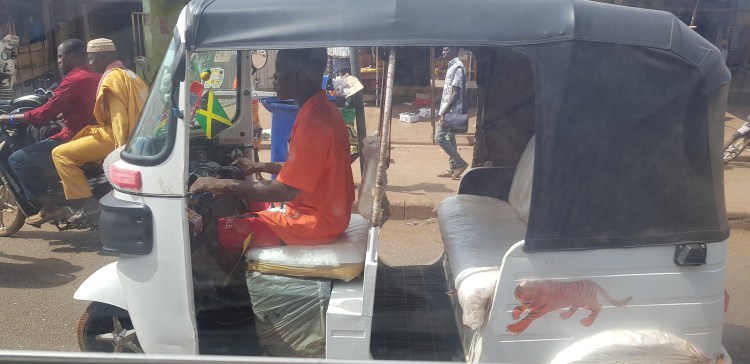
Motorcycle taxis are common in rural Jamaica, especially going up and down communities in the hills. Since I was young I loved riding them. It would have been nice to ride one here in Ghana but it is against SIT policy. However, as said in one of Papa Attah’s sayings “when good is not available, bad is better.” This means if the prefered option is not available, we should be content with what we have. There is another common form of transportation called a “yellow yellow” which is somewhat of a motorized rickshaw (shown in pictures below). I took one for the first time tonight and it was an interesting experience. I liked it although it wasn’t exactly the same kind of rush as a motorcycle. Oddly enough, these I see mostly operated by men. Also in reference to my first cultural connections post, the “yellow yellows” also have a lot of Jamaican flags (as seen in one of the pictures below).

Cultural Connections 3

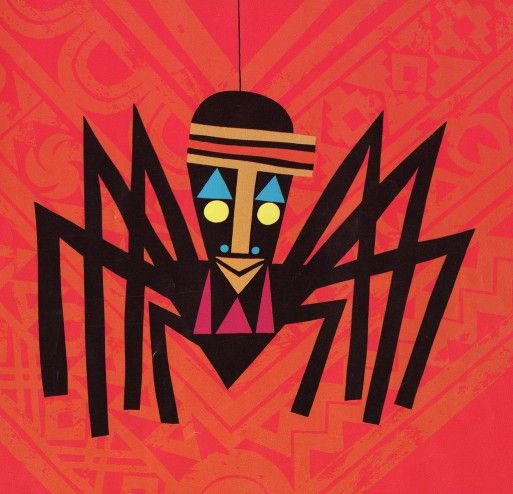
Tonight we had Fufu and goat stew outside with the queen mother of Patakro (the village I currently am in). Papa Attah explained that she is hid point of contact for anything he needs in Patakro or Obuasi, all of which she does voluntarily. After eating and discussing some things, Papa Attah decided to tell us an Anansi story. Anansi is a Spider that is very mischeivious. Anansi stories are usually told to young children to teach morals or lessons. What makes this significant is not only is this a Ghanaian tradition but Anansi stories transcended the Atlantic and are a part of Jamaican culture as well. Although I remember the specifics of the stories, I remember hearing 2 Anansi stories from my aunt when growing up so it was really cool to hear an Anansi story in the place where they began.
In the story Papa Attah told us, Anansi wanted to be the wisest person in the world so he traveled all over the world gathering wisdom and putting it in a gourd. After collecting all the wisdom, he attempted to put the gourd at the top of a tree so nobody else could get it. Anansi was trying to climb up the tree with the gourd in front of him and every time he tried to climb, would fall down. One of his sons saw him and advised him to carry the gourd on his back to climb the tree. Anansi replied by saying “foolish boy! I have all the wisdom with me here and you are here trying to advise me?” After some more failed attempts to climb the tree, Anansi decided to take his son’s advice. When he got to the top of the tree, Anansi said “I have all the wisdom in the world but still my foolish son knew more than me” and out of anger, he threw the gourd to the ground, breaking it. Those who got to the tree early got wisdom and those who didn’t, did not. In conclusion, Papa Attah said that no one person can posses all wisdom, there will always be someone that knows more than you in a different subject. Also everyone’s expertise, whether smart or less intelligent, a doctor or a cook, has value and is needed to function as a society.

The Children of Patakro

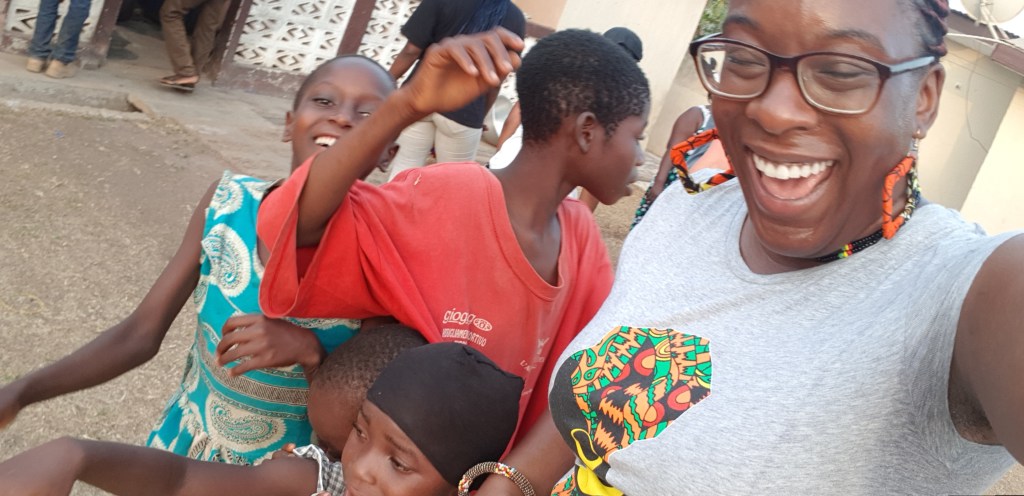
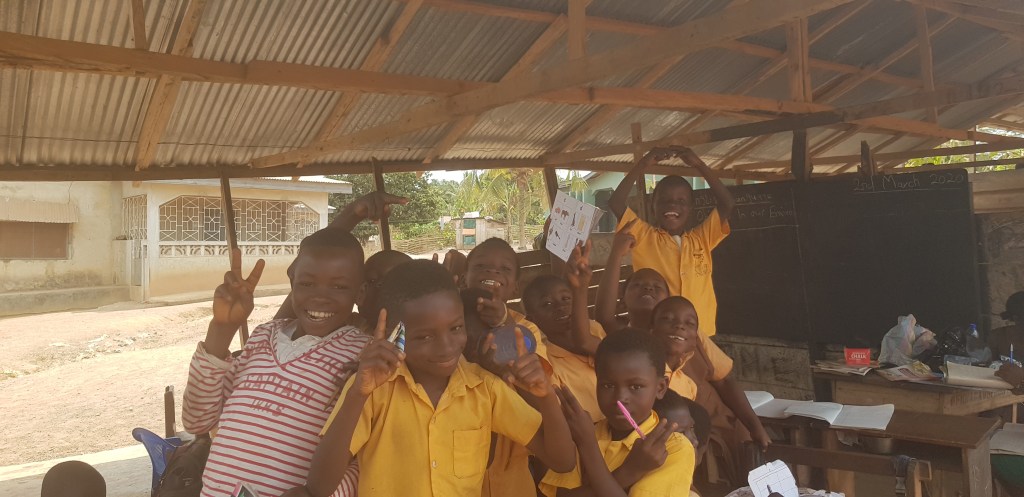
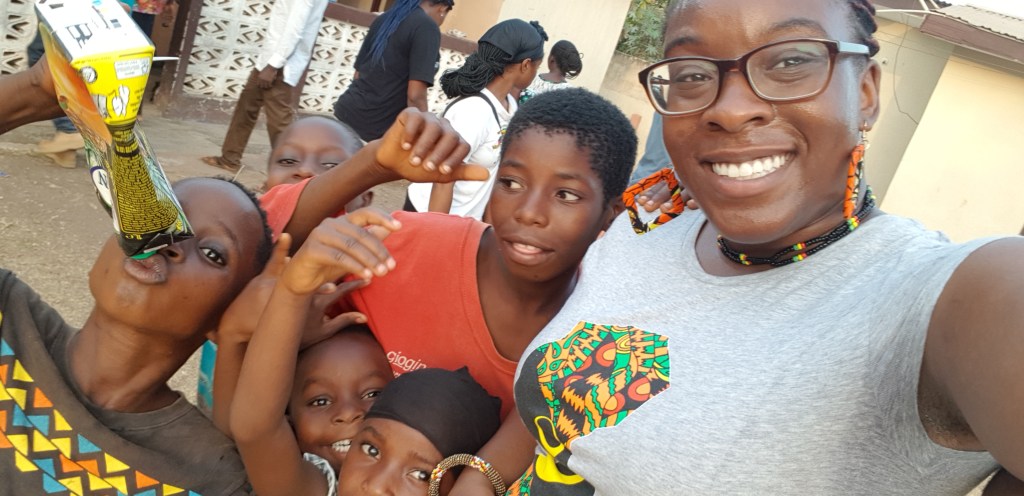
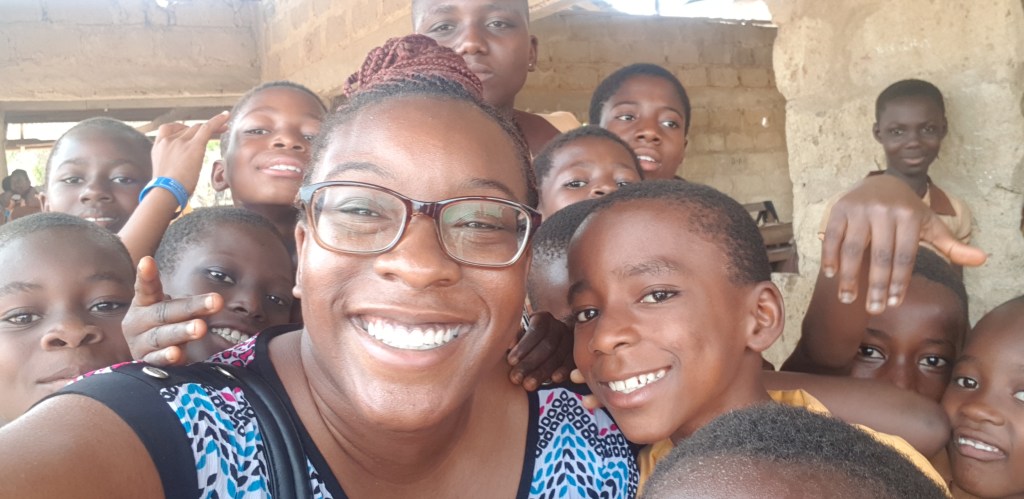
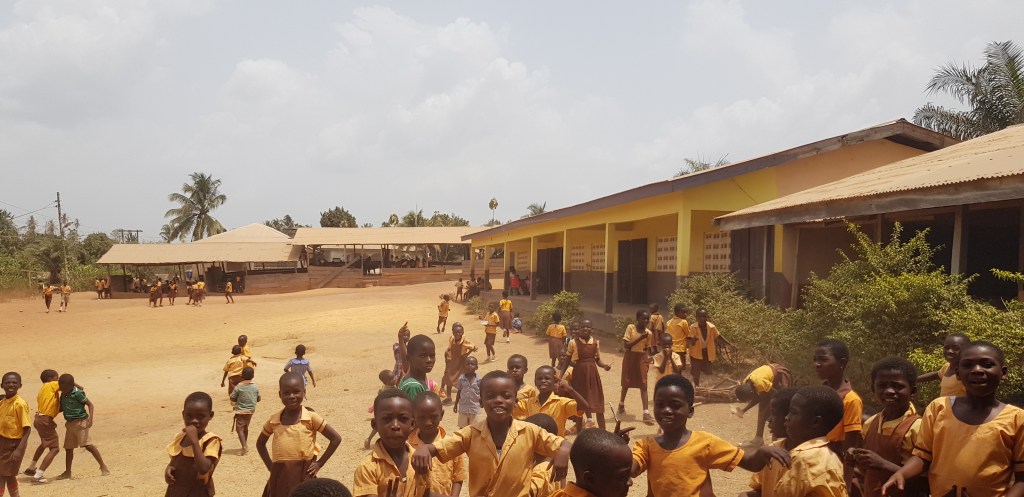
On Thursday, we left Kumasi and went to the village of Patakro about an hour and a half away. During my stay at Patakro, I have haf the opportunity to make acquaintances with and hang out with the children of Patakro; however, I wouldn’t say it is fully voluntary. For some reason, since we came to the village, all the children keep following us. Some would even skip school to try and hang out at the program site with us. It even got to the point where some would fight others in order to hold our hands. (At this point I have the word “Gyae” ingrained in my speech, meaning stop your behavior). They hovered more so over the foreigners (Michael, Avyance, and myself) than the native Ghanaians. Even among the foreigners it was clear that Michael was the the favorite, as he is the only white person among the group. Even though I’m not necessarily the main attraction of the children, I feel very overwhelmed by their presence.
Personally, I am a bit introverted and like time to myself. However, with the children following me, I cannot have this chance to be on my own except when I am about to go to sleep (it’s as if the children have no bed time). I know that they have no bad intentions and are genuinely fascinated so I find it difficult to tell them to leave. Despite this, I do appreciate the children’s company and they truly are precious. They always help me get where I need to go as well as assist me with my language skills. We also exchanged children’s games games and our mini dance competitions are always fun. . Overall, I love the children and they are so sweet, I just wish they weren’t around 24/7.

Kente

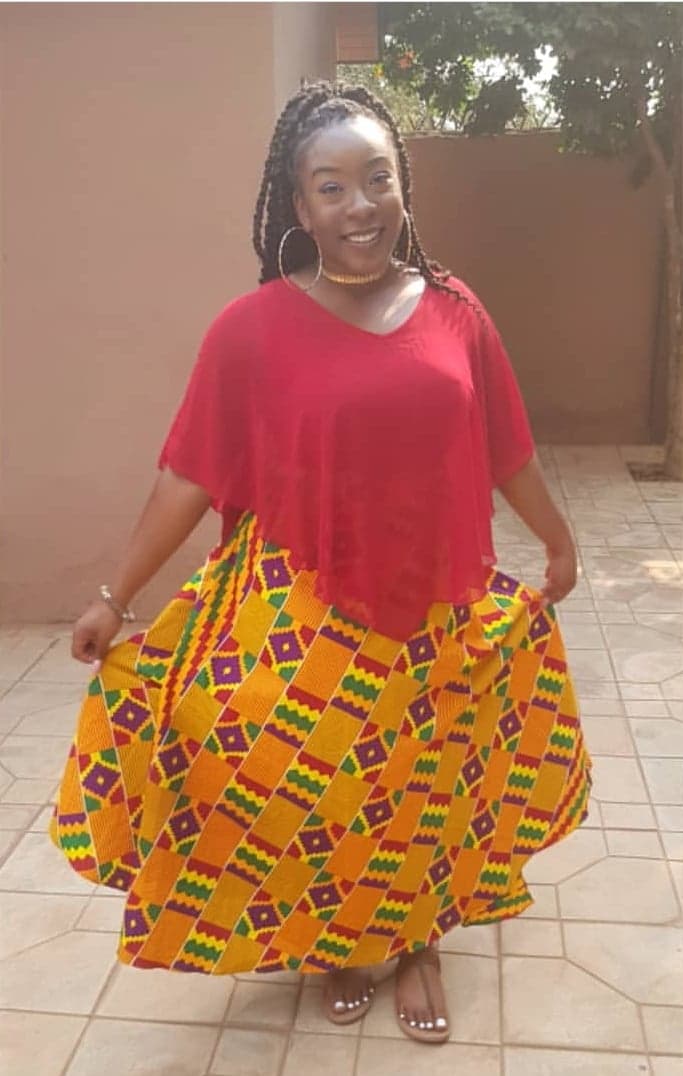
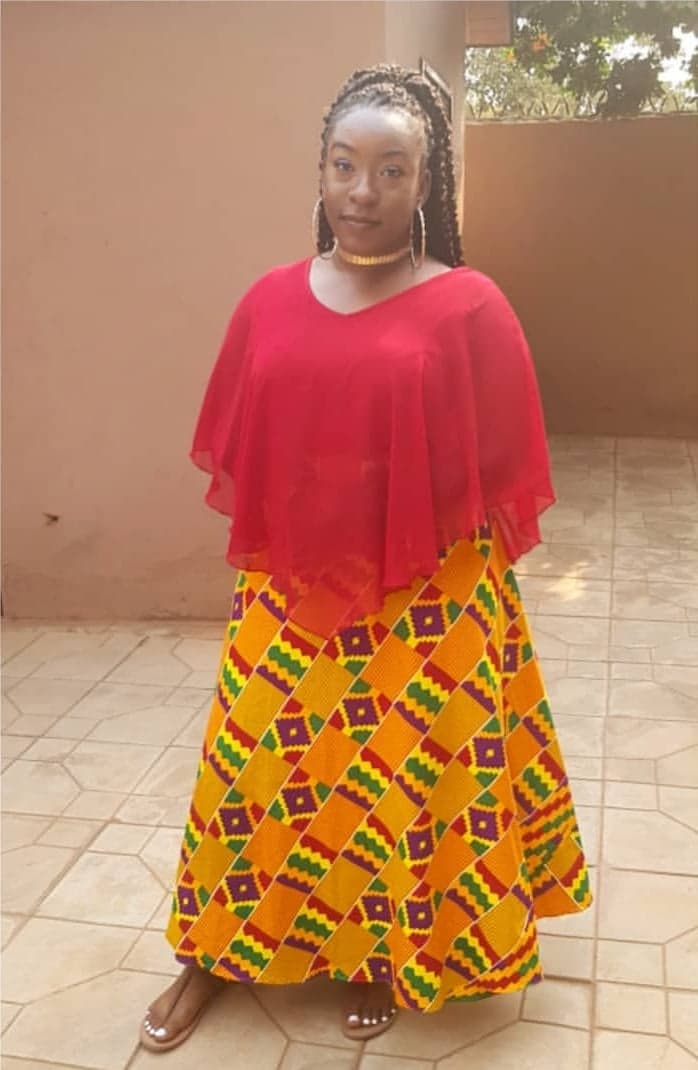
On Sunday, we began the traveling portion of the semester, beginning with Kumasi. We will be here until Thursday when we will go to our home-stay in the village (the village is a term used to refer to the most rural areas of Ghana). Yesterday, we had the opportunity to go to Bonwire, a town/village that is about 30 minutes outside of Kumasi. Bonwire is a weaving village, where almost everyone knows and weaves Kente cloth (the most skilled weavers in Bonwire traditionally wove cloth for the Asantehene). Kente cloth is a traditional Ghanaian cloth originating from the Ashanti people that is woven in different designs and colors. Each print has a different meaning and can convey messages for those who know how to read it. Although this cloth is traditional and is a staple “African fabric” (parentheses because often we get Ankara fabric with Kente patterns printed on them but not actual kente) for those in the diaspora, the cloth actually isn’t as traditional as I thought.
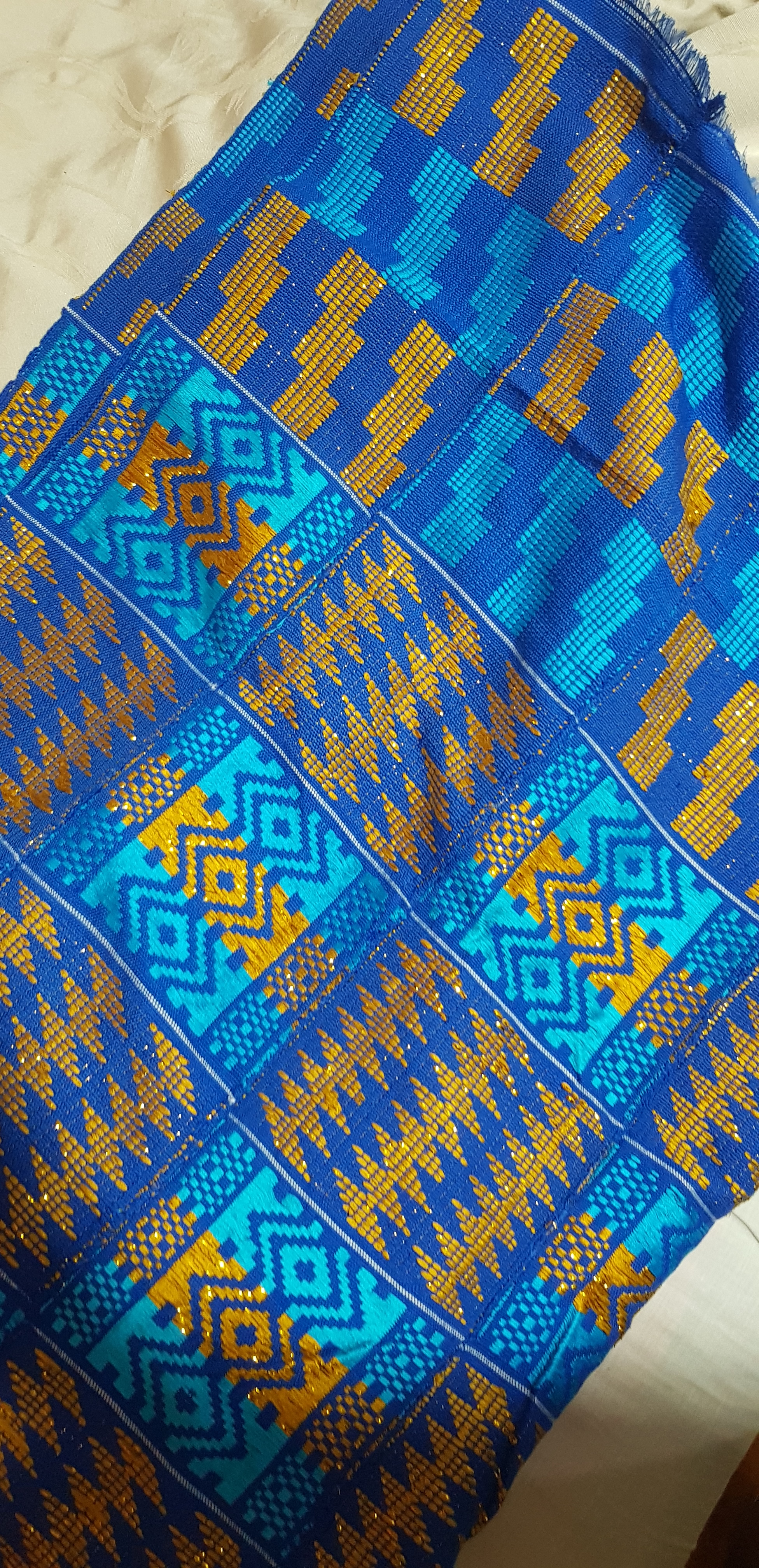
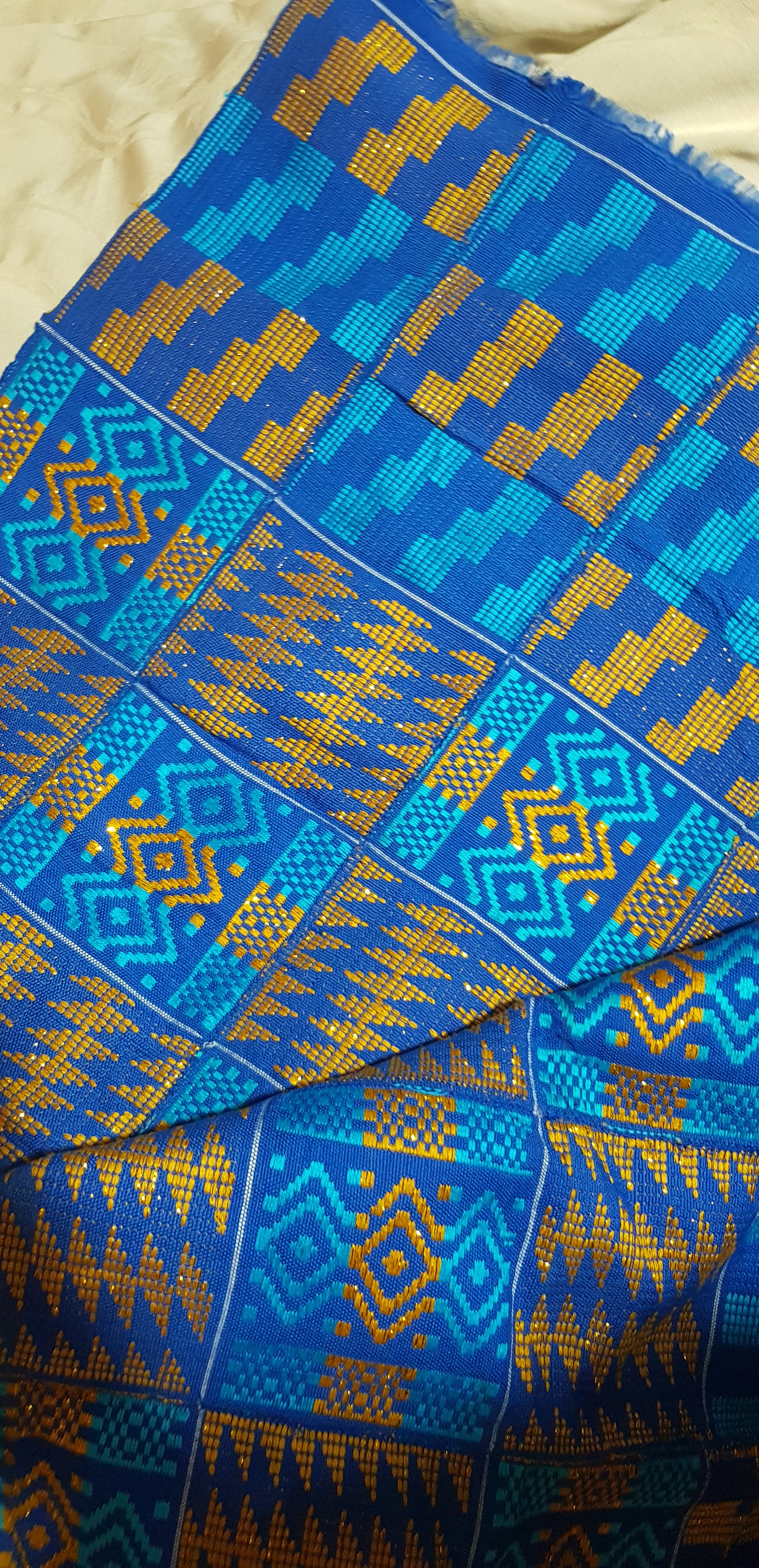
According to the weavers of Bonwire, the practice of weaving began with two hunters observing a spider. They began by weaving baskets began weaving cloth once they began trading with Europe and obtained silk thread (They now use Chinese polyester thread). I find that interesting. Although it was still a long time ago, with how staple the cloth is I thought it would have been something that preceeded European interaction but it makes sense. Apparently they used to wear animal skins before. When making the cloth, weavers weave patterns in strips and then sew them together to make the cloth. Depending on the weaving style (single weave up to triple weave), the designs can range from very simple to very complex. After observing someone weave, we had the opportunity to buy kente and kente products directly from people. Among other products I bought 2 yards of triple woven blue Kente with gold embellishments. With the help of Mavis, one of the native Ghanaians in our class and arguably my best friend on the trip, I was able to haggle it down to 200 Cedis (which is a serious bargain for triple woven kente. Out of all of the Kente I saw, that one drew my eye the most. Unfortunately, I forgot to ask what the pattern meant at the time; however, today when I went to the Mankyia Palace, I was able to ask the tour guide who fortunately knew the meanings and names of different Kente designs. [The old palace of the Asantehene, bought by the Ashanti from the the British (originally a gift from the British) during colonization and has been converted to museum]. He said that it means “the royals” or “the royal crown” which is pretty cool since I picked it without knowing the meaning. Now I am just wondering what to have made with it

Kwame Nkrumah Mausoleum

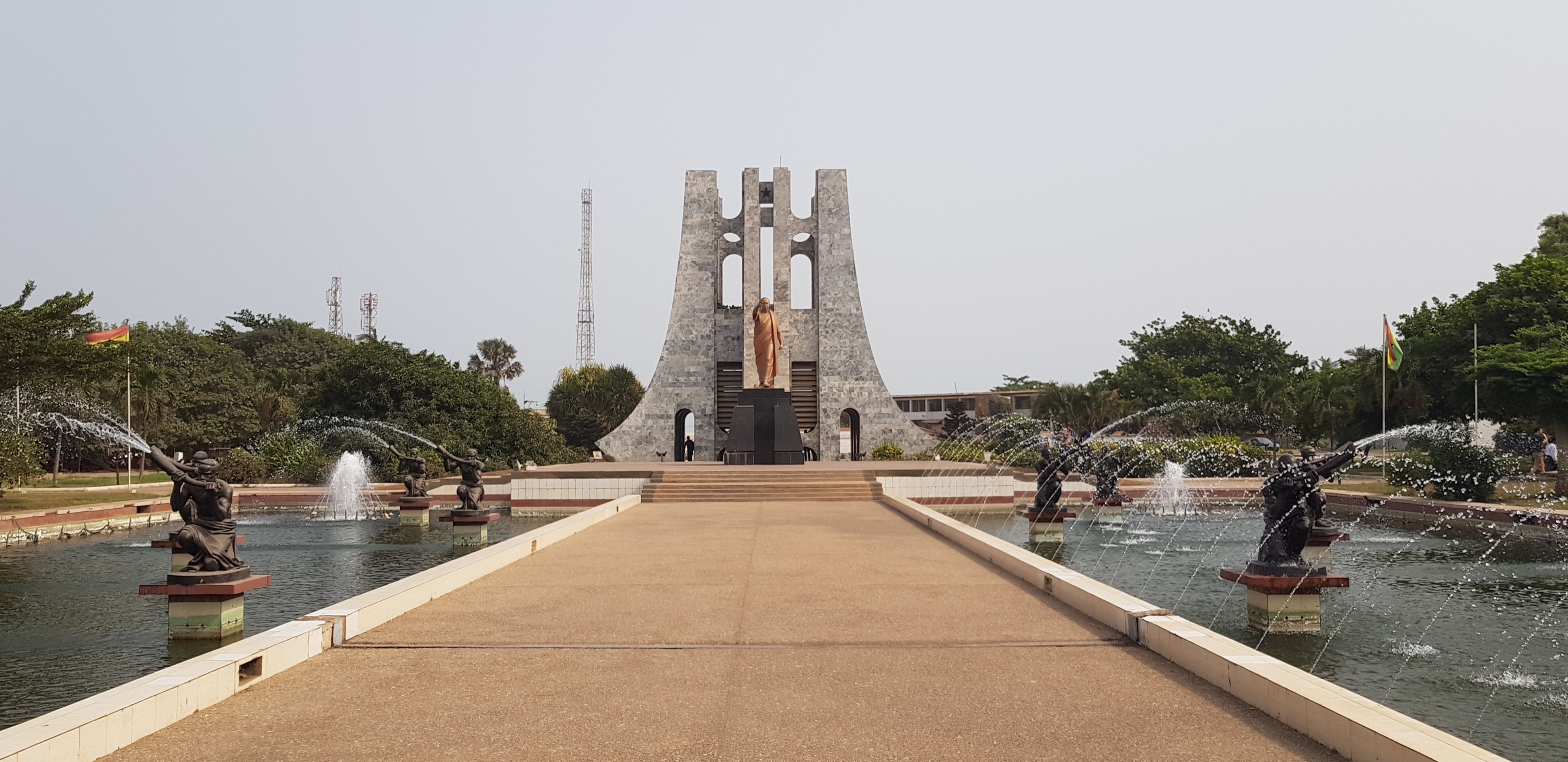
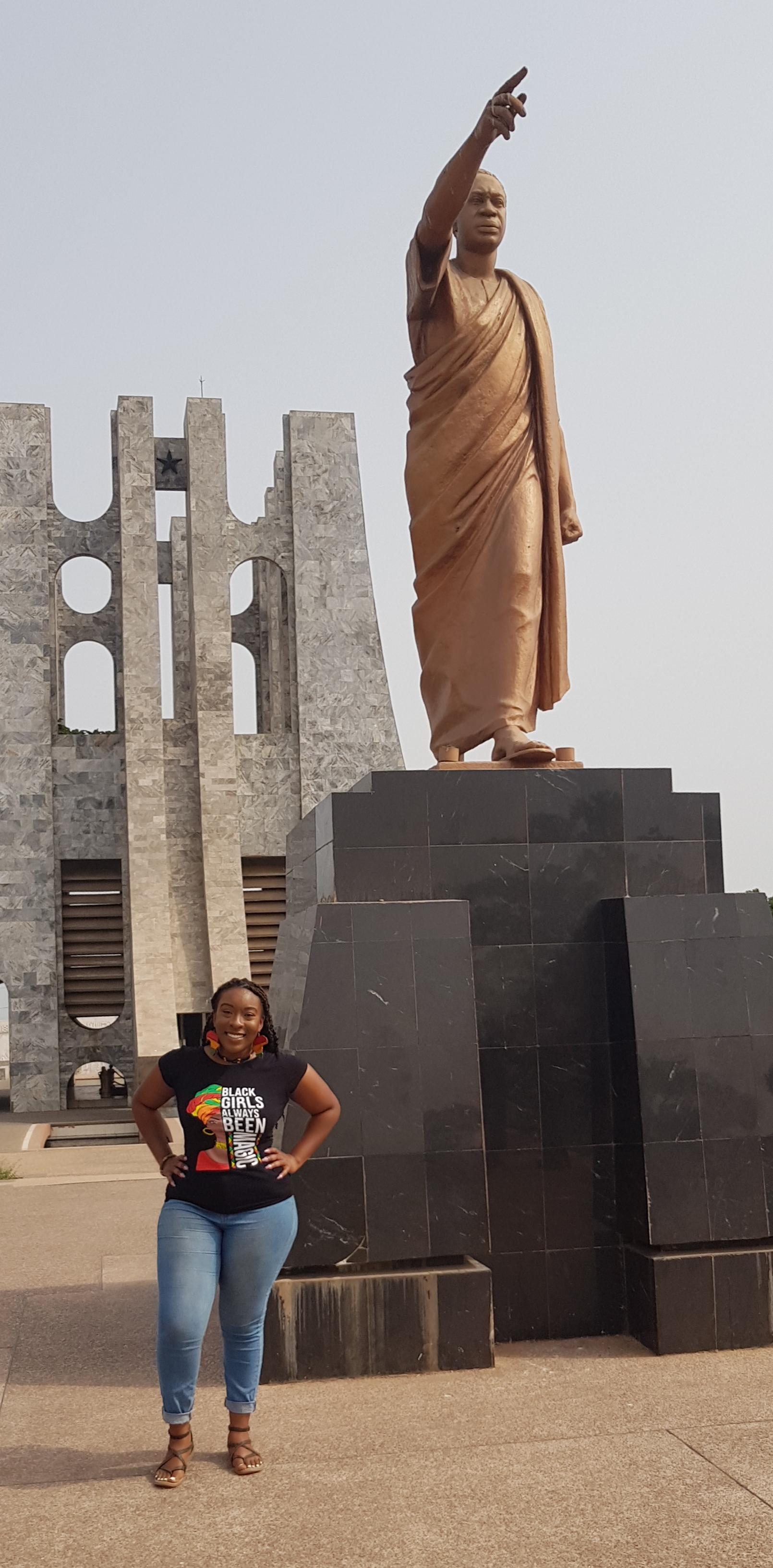
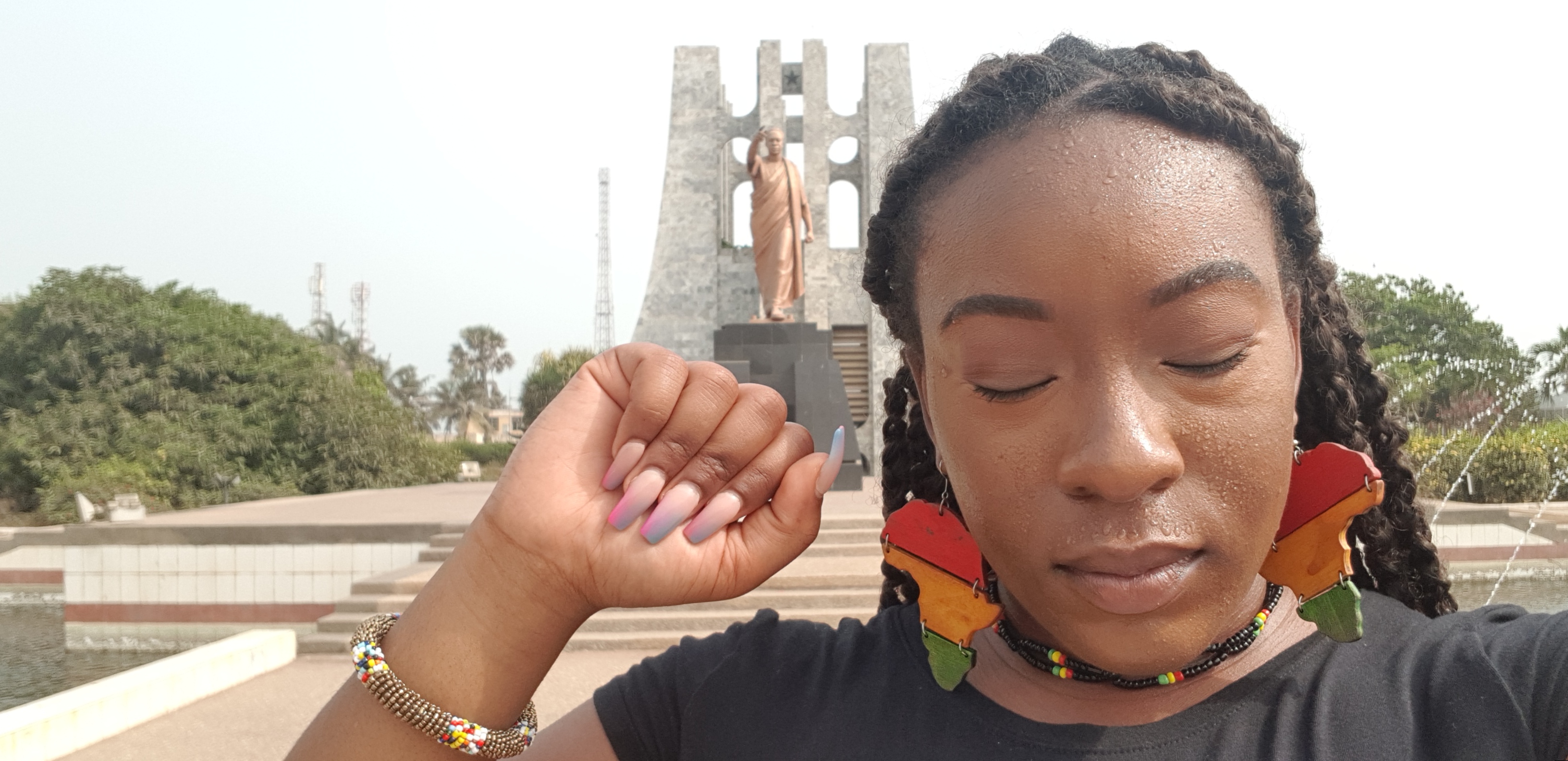
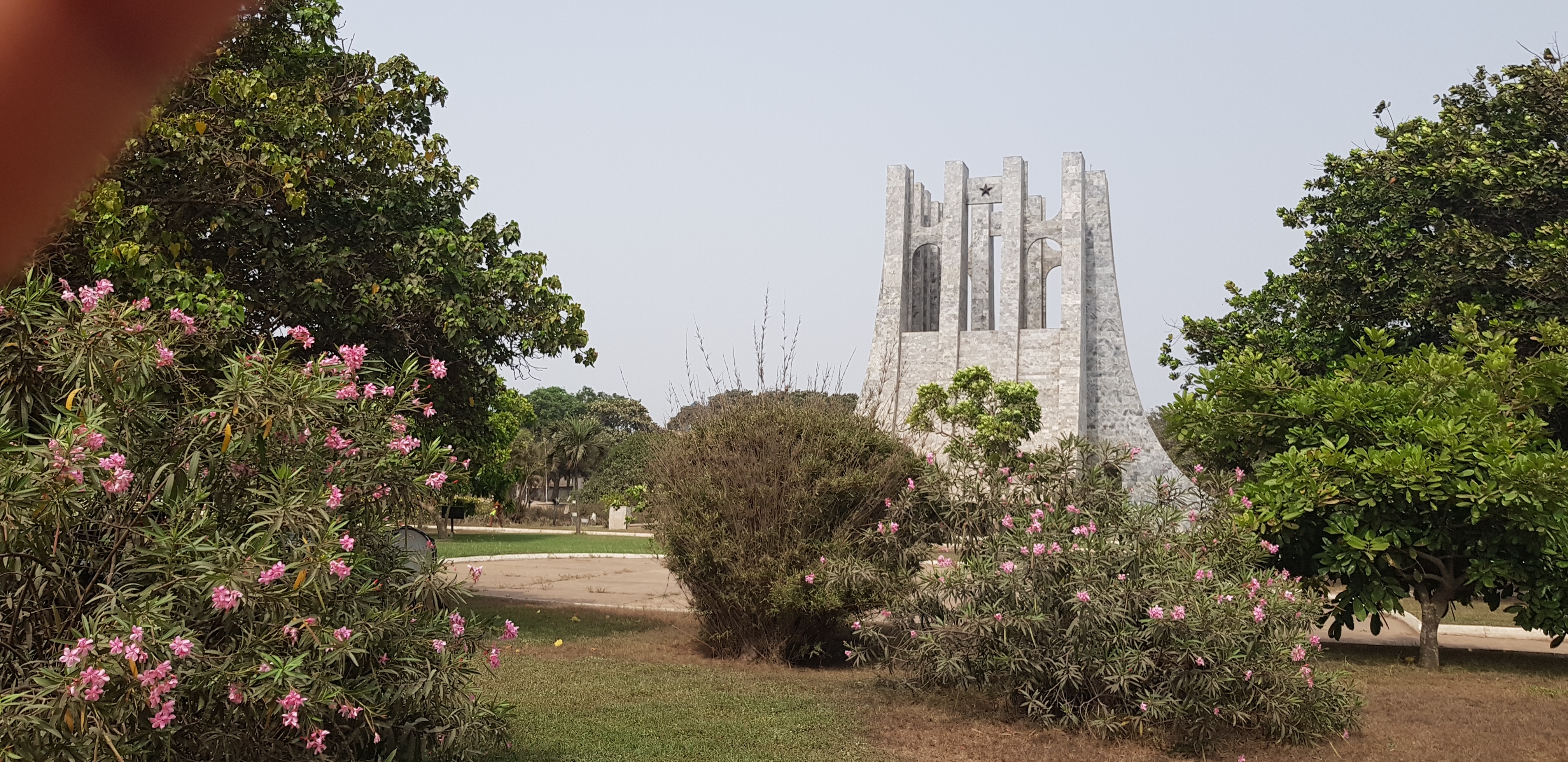
Today I had the priviledge to go to the Kwame Nkrumah Mausoleum. Kwame Nkrumah was the first president of Ghana and played an instrumental role in Ghana’s independence, the first Sub-saharan African country to succeed in doing so. Nkrumah is a personal hero of mine because of his role in Ghana’s independence but the political views from a paper I read of his. Learning more about him was one of the reasons I chose Ghana to study abroad and going to the Mausoleum meant a lot to me.

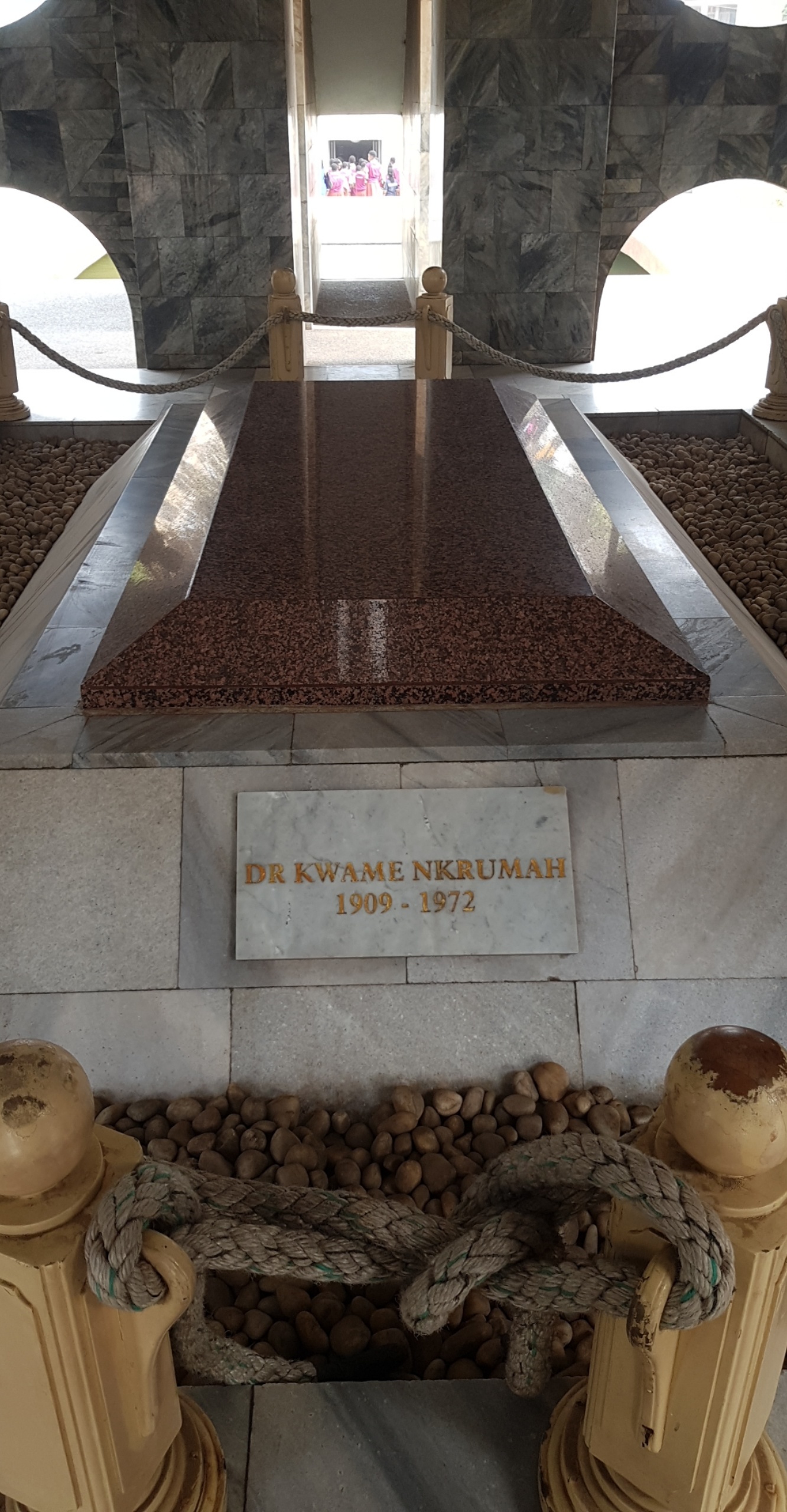
After going to the Mausoleum my respect for Nkrumah has greatly increased. Firstly, the Mausoleum is located in the park where Nkrumah declared Ghana’s independence which previously was restricted to only Europeans. This shows how bold he was. Not only did he break custom (I’m unsure if it was legal segregation or social) by speaking there and bringing other native Ghanians, but he went and declared independence. It makes the area extremely symbolic. However not only was Nkrumah instrumental in Ghana’s independence but pushed and funded independence movements of other African nations which is why many African countries incorporated the red yellow and green into their flag. In a sense, he was the Simón Bolivar of Africa. His role was so great that after being ousted, he was named Co-President in Guinea where he spent the rest of his life in exile. Additionally, he was a strong pan-Africanist, believing that Africa should unite and wanted to make a United States of Africa (again like Simón Bolivar in South America) which is an ideology I subscribe to to an extent. He was so invested in this that he married an Egyptian woman, as symbolism of unity between Black Africa and Arab Africa. What is even better is that even though the move was political, based on what we were told and the request of Nkrumah’s wife to be buried next to him upon her death shows that they did love eachofher and supported eachother’s causes. What really increased my respect for Kwame Nkrumah was his advocacy for women. He held meetings for women accross Africa and reserved jobs in government strictly for women. He saw the importance of woman empowerment and tried to make it happen within his power. He also wrote a lot of books on top of all he was doing for the continenf of Africa.

The monument under which Nkrumah and his wife are buried is supposed to represent a tree that has stopped growing or was cut to represent Nkrumah’s vision for Africa has being unattained due to the coup d’etat and his relatively early death. The statue of Nkrumah shows him pointing forward representing his famous quote “we look neither east nor west, but forward” meaning that we should keep progressing and not deviate.
I will end this post with this quote from Nkrumah, “As far as I am concerned, I am in the knowledge that death can never extinguish the torch which I have lit in Ghana and Africa. Long after I am dead and gone, the light will continue to burn and be borne aloft, giving light and guidance to all people” His light is still burning and even in the smallest way, I hope to keep his legacy alive.

Cultural Connections 2

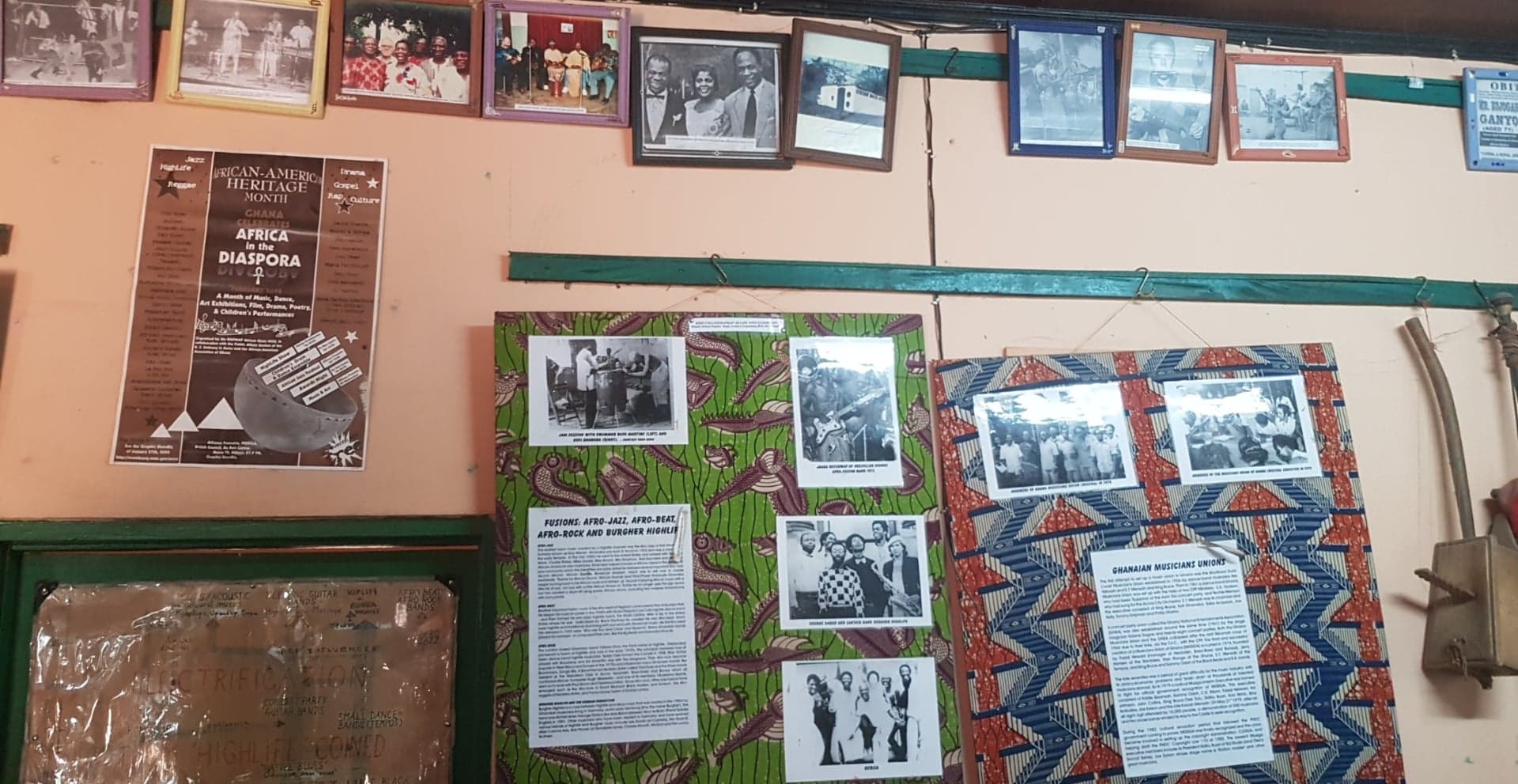
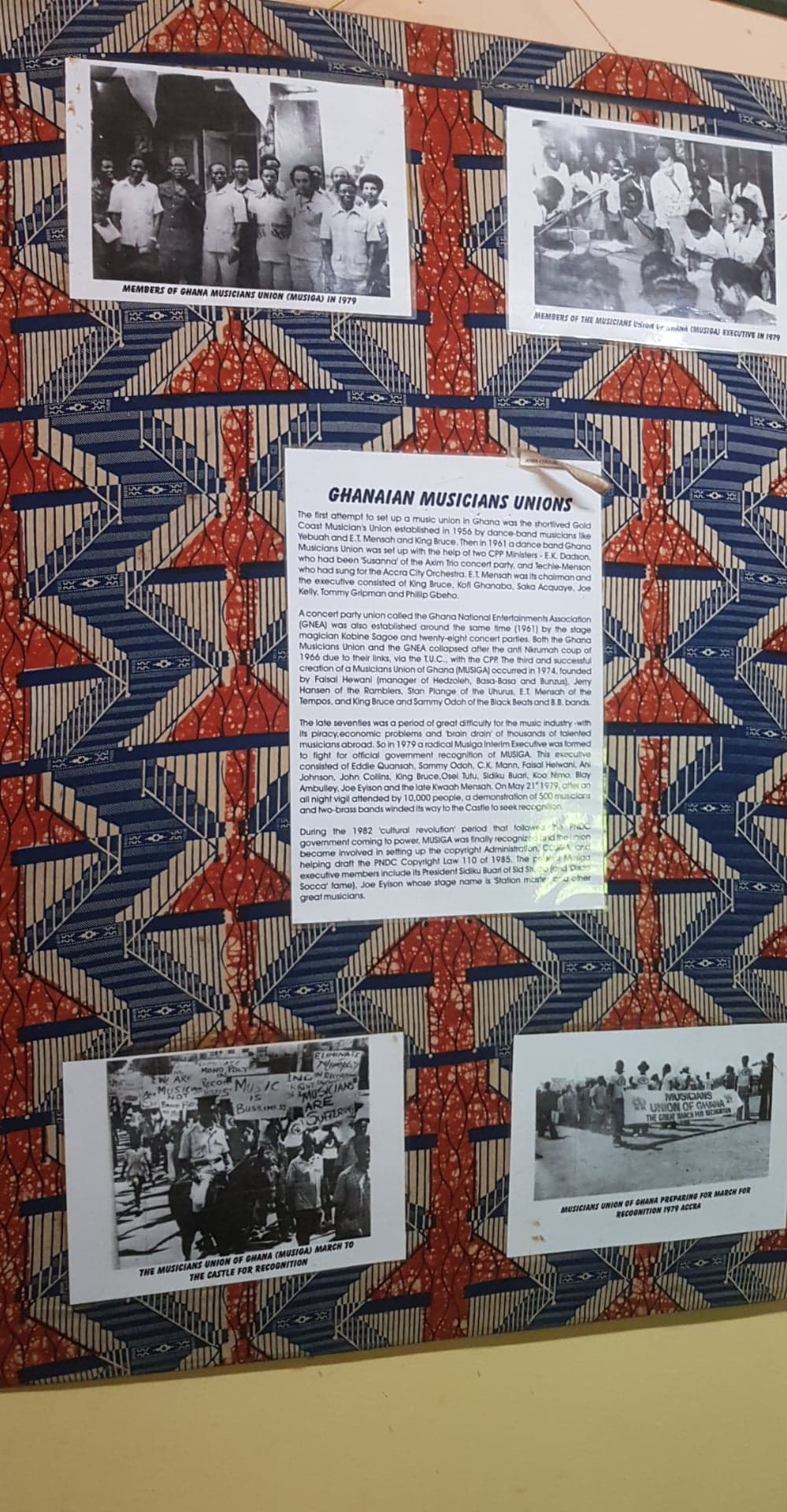
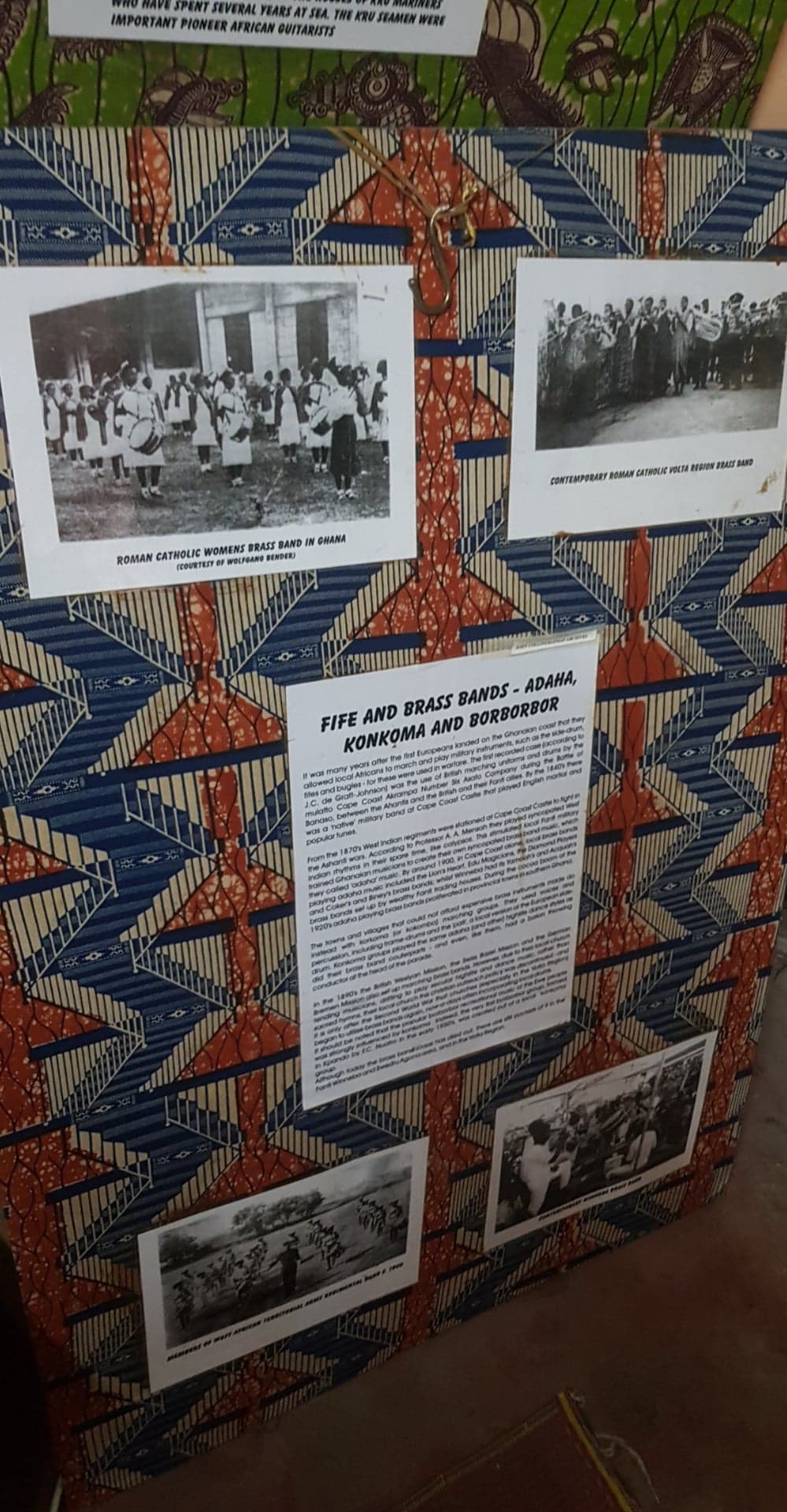
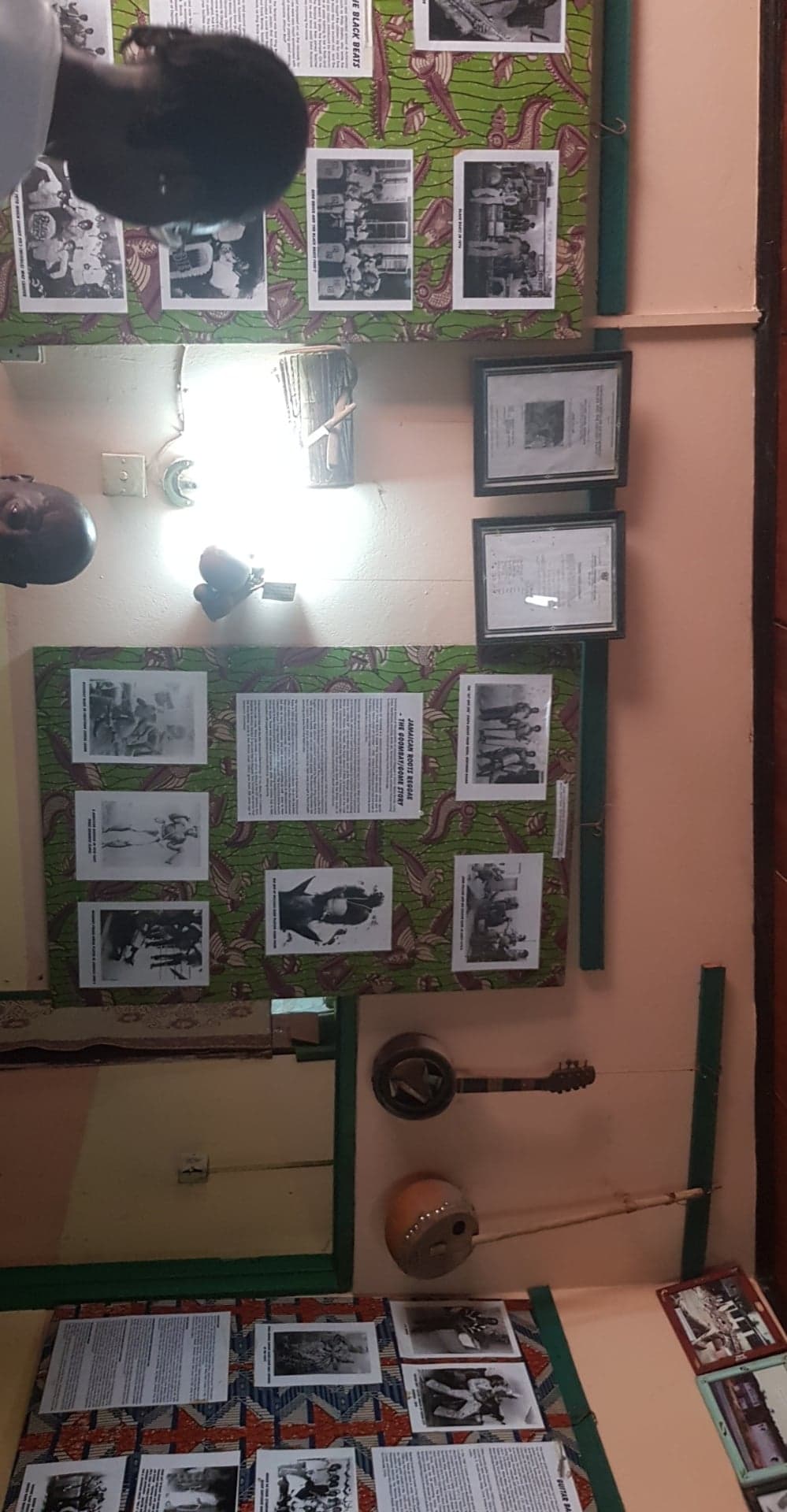
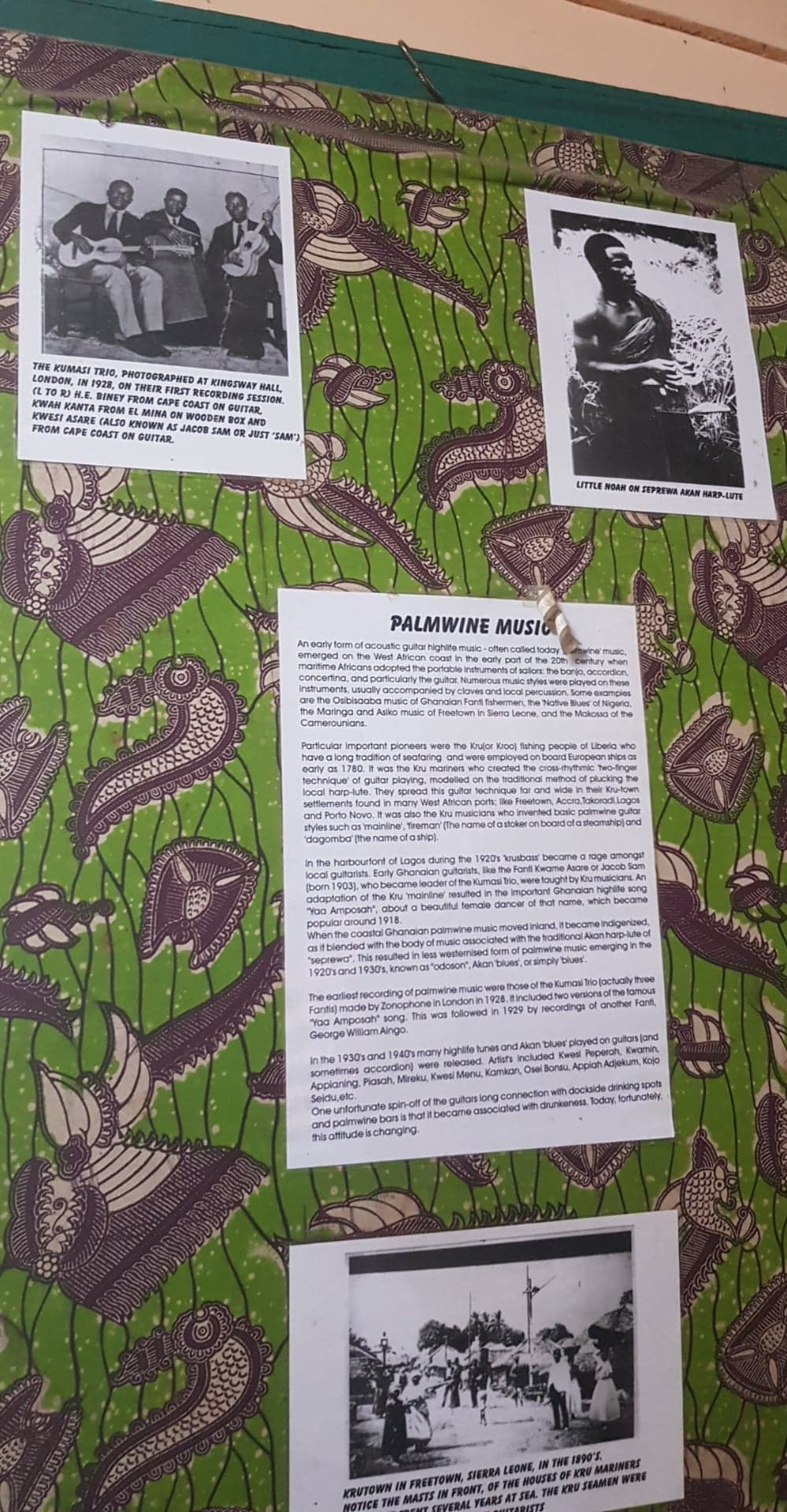
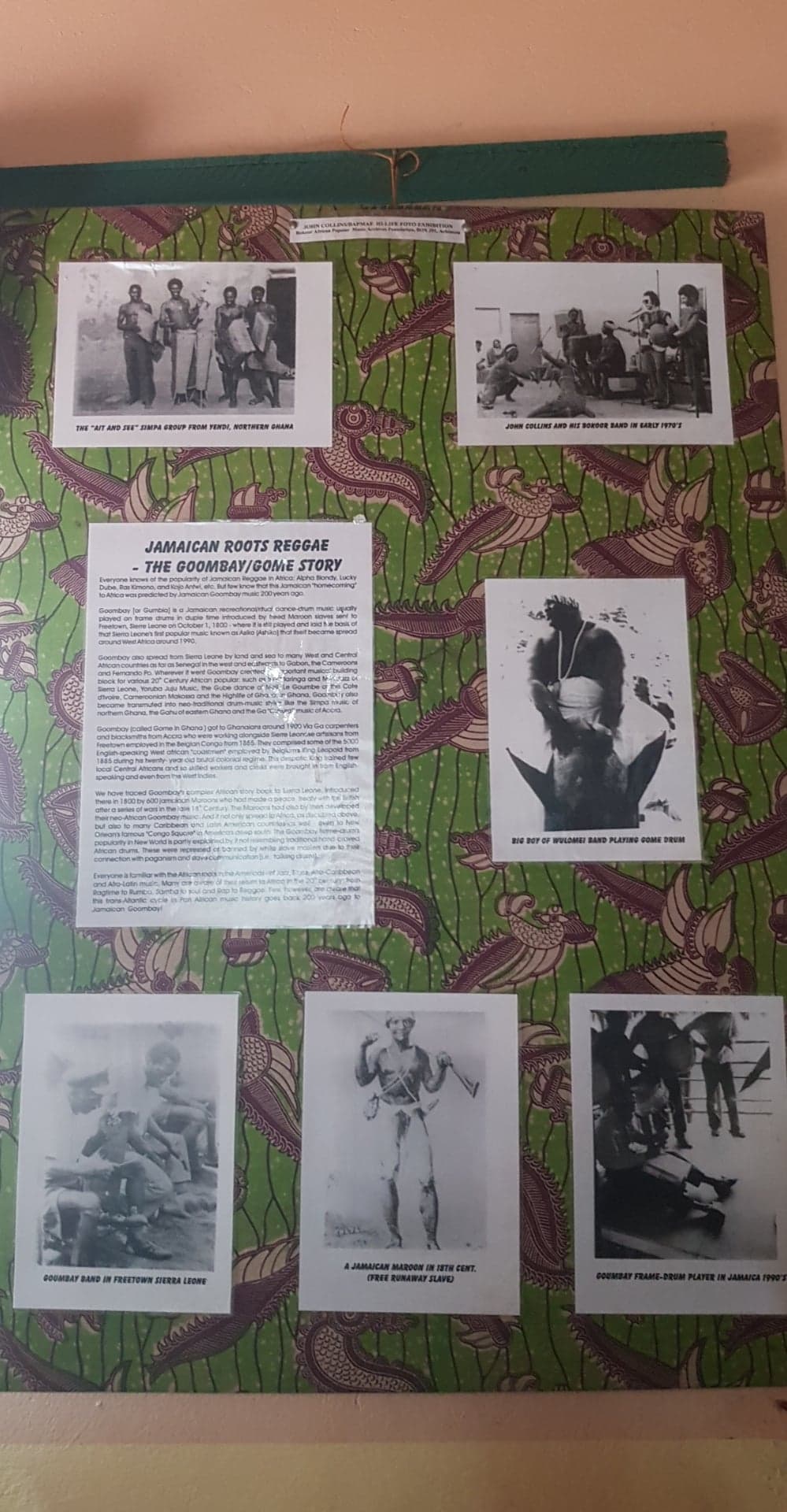
Today, I went to a lecture given by Dr. John Collins, a Historian of Ghanaian music, especially Hiplife. He has turned his house into a museum and seems to be very knowledgeable about the music of Ghana. He is the leading academic in Ghana studying Ghanaian music and has written a lot of books. His lecture on the progression of Hiplife is quite interesting; however, what interested me most I learned about Jamaica’s influence on Ghanaian music. Recently, as I alluded to in a previous blog post, there is a strong presence of Reggae and Dancehall in Ghana. What I didn’t know is that Jamaica has been influencing Ghanaian music for over 200 years (and other countries such as Sierra Leone and Nigeria). Apparently over 200 years ago when Maroons and other rebel slaves were sent back to Africa they brought music a long with them. For example, they brought back a modified drum that is played by sitting on it. Additionally, they brought a folk music called Gome which is still played in Ghana to this day. They also brought the Quadrille dance to Sierra Leone (where a lot of Maroons were deported to after their loss in the Second Maroon war). Quadrille is a traditional Jamaican Dance (and is also danced in other countries such as Dominica and St. Lucia) It was so popular in Sierra Leone that they contested making it the national dance. I find that so fascinating

Jamaica’s musical influence in Africa does not stop there. Jamaicans and Trinidadians also brought a certain beat to Africa that is used in the popular Ghanaian music genre Hiplife. During the Ashanti Wars of the 19th century, when the British were trying to conquer the Ashanti for colonization, the British brought people from Jamaica and Trinidad to fight because they were more immune to the diseases and equipt for the climate of the Ashanti region. While there, they were forced to play British marching rhythms on the drums; however, in their free time, they would also played a more syncopated version which was in turn copied by local Ghanaians as it was similar to their rhythms. Not only is it interesting that Jamaica has impacted Ghanaian music but that Jamaicans played a role in Ghanaian history (unfortunately on the wrong side). This is important to me because it shows that apart from just ancestry, Jamaicans and Ghanaians are much more linked than I originally thought. Also it displays that although people we were separated, we were never fully separated and there has always been movement of people and culture between the Americas and Africa.

Akwasidae

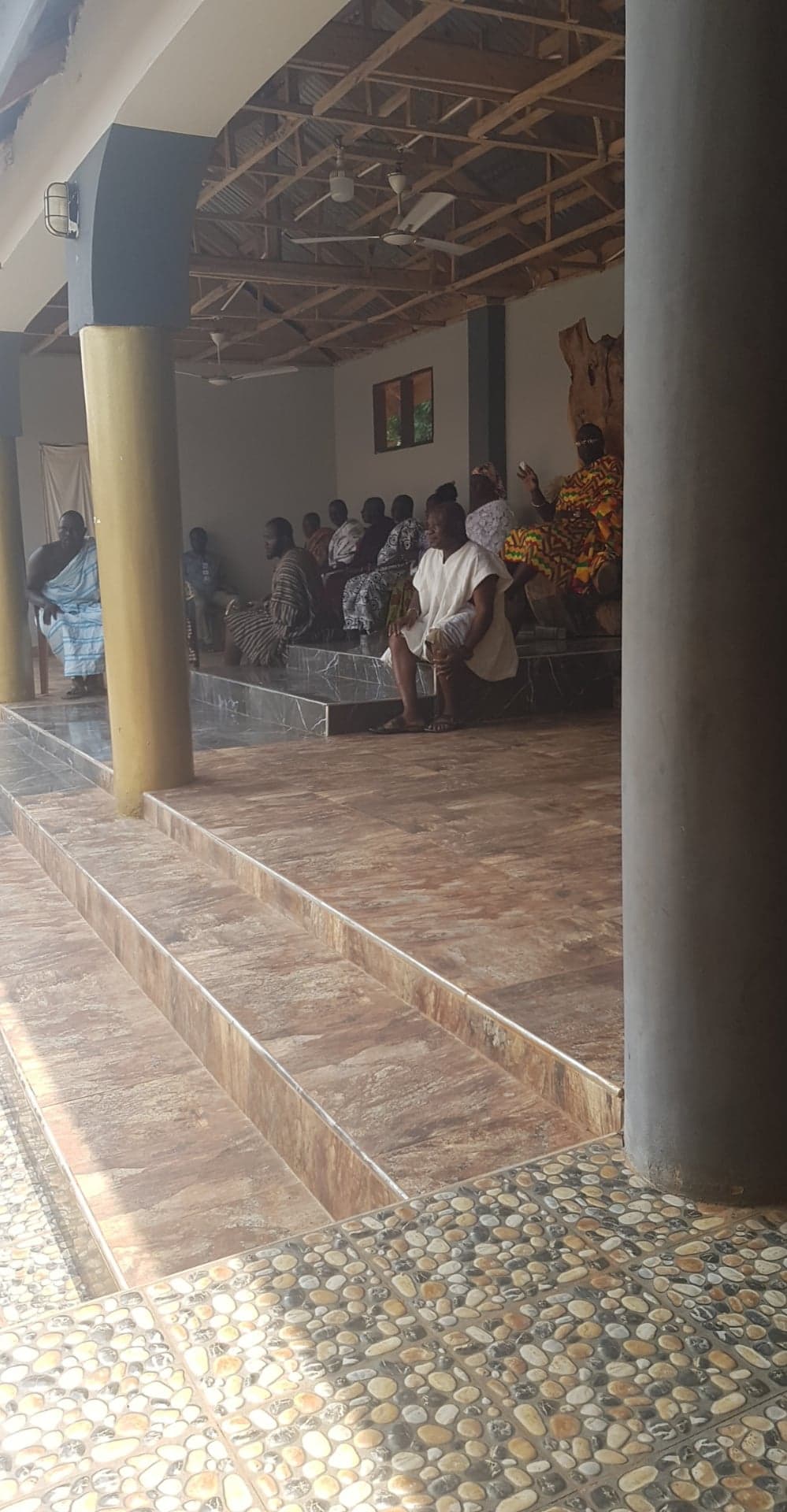
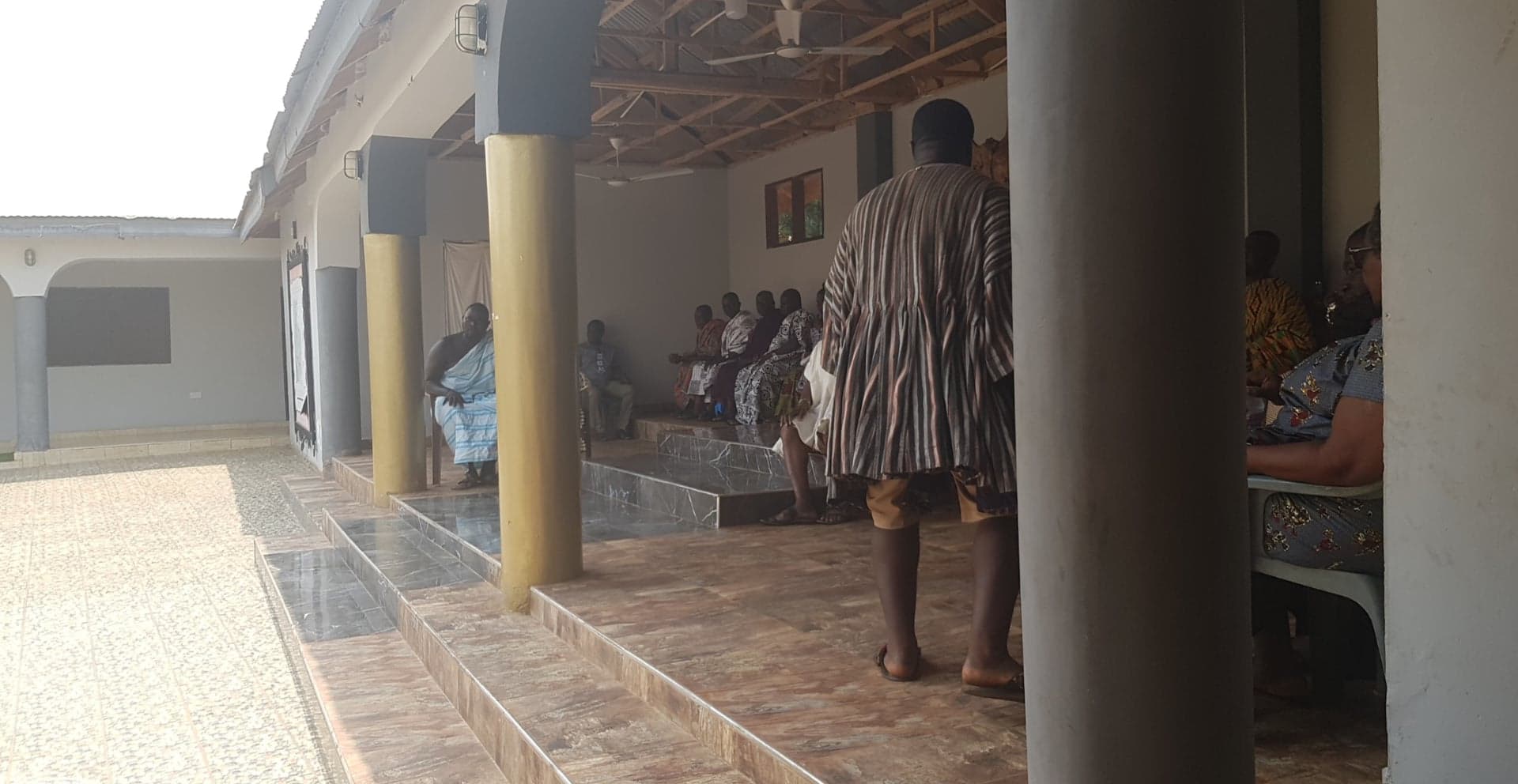
Today I went to the Akwasidae festival in Adumasa. Akwasidae is an Akan festival that takes place every forty days (celebrated on the Sunday) where all the sub-chiefs of a state meet with the Chief to discuss the previous 40 days, find solutions to problems, and plan for the upcoming 40 days. Every different Akan state has their own Akwasidae at a different time. The one we went to was the Akwasidae of Akwamu state, headed by Nana Ansah Kwao IV.

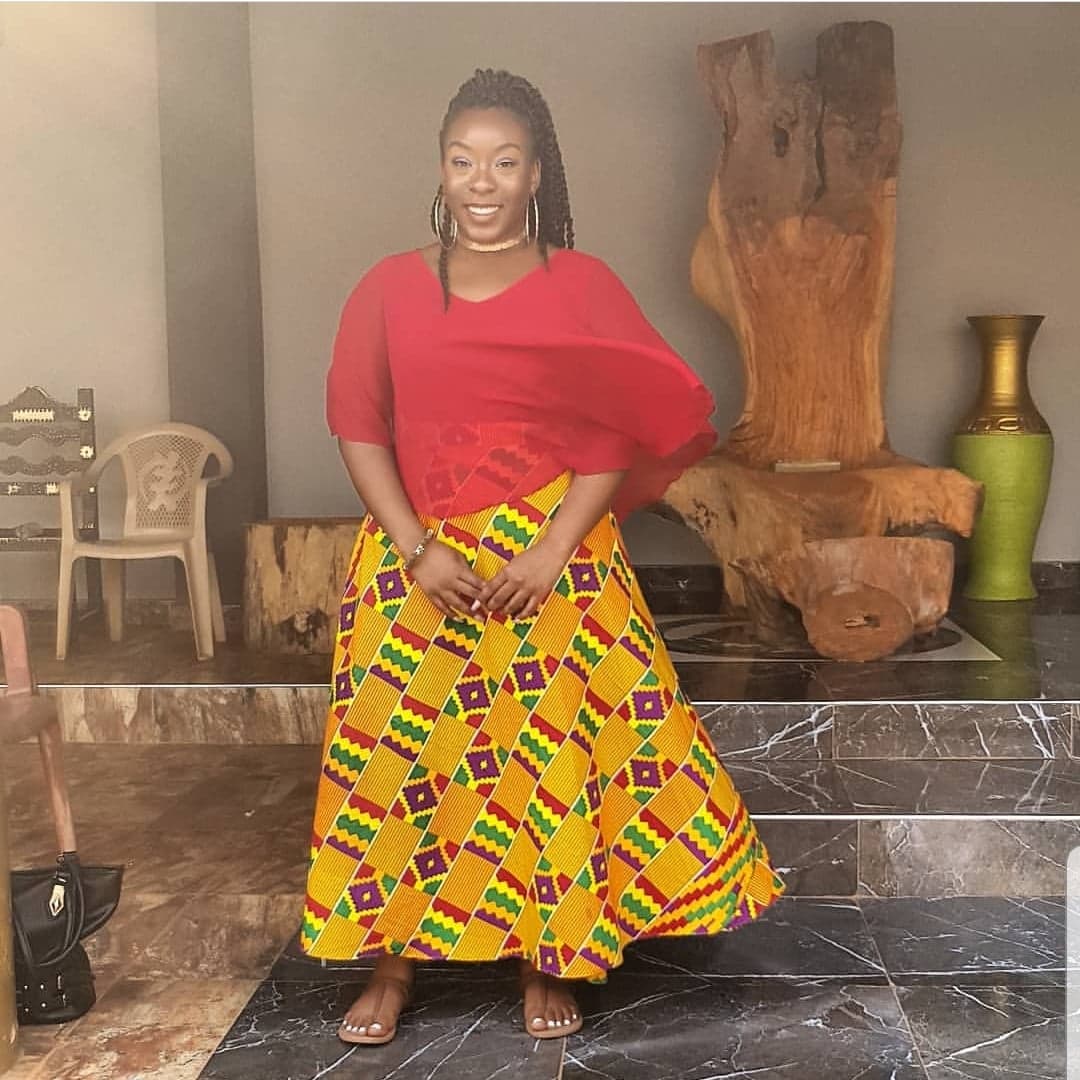
Throughout the day, I made a lot of observations, my main observation being different  protocols that had to be observed for our visit to the palace for Akwasidae. Firstly, we were strongly encouraged to wear African print clothing. I am unsure if this was necessarily a protocol or customary; however, everyone there was dressed in some traditional clothing. Secondly, on the way to the palace, we stopped to get two bottles of Schnapps to present to the Chief. It is a taboo to go before the Chief empty handed; however, it is interesting how the tradition of bringing liquor to the palace requires a European alcohol. At first, I thought that this was just an arbitrary choice made by who bought the drinks; however, in the palace, I realized that this particular drink was also brought by other visitors and only empty bottles Schnapps was found at the altar. This makes me wonder what was used before the Europeans arrived (although I suppose palm wine was used). I also wonder who decided to make schnapps the official drink of offering and why. Was this the drink of choice for a long time or has the drink of choice changed with different ruling Chiefs and their preferences.

Another protocol that I find interesting is that the Chief speaks through a linguist and does not speak publically. I have been told that the linguist goes through years of training and his purpose is to maintain the prestige of the Chief. For example, if a mistake is made in a speech, the linguist would be blamed instead of the Chief himself. Along with the protocol of the Chief having a linguist, the way one speaks in the palace and among Chiefs is special. It is encouraged for one to be flowery in one’s language and to speak in an indirect manner such as through parables. This is not something that I was necessarily able to pick up as I am not very fluent in Twi but it was later told to me and was evident in Papa Attah’s mannerisms. Lastly, as a group of guests, it is necessary to have a spokesperson, usually the oldest in the group. In our case, it was Papa Attah. He was the only one that interacted with the linguist and other Chiefs during our official visit. There was one thing that I did not understand. A man introduced himself to us as the wife of the Chief. I am unsure as to why because the Chief is married to Gifty Anti and this person is a man. Was he there because Gifty Anti was not or is this an actual position. There were many more observations that I made; however, these were the most notable or had questions about. Overall, this was a very interesting event and a good first-hand way to learn a bit more about traditional cultures in Ghana.

Create your own website, free on WordPress.com.Create your own website.
Start free