
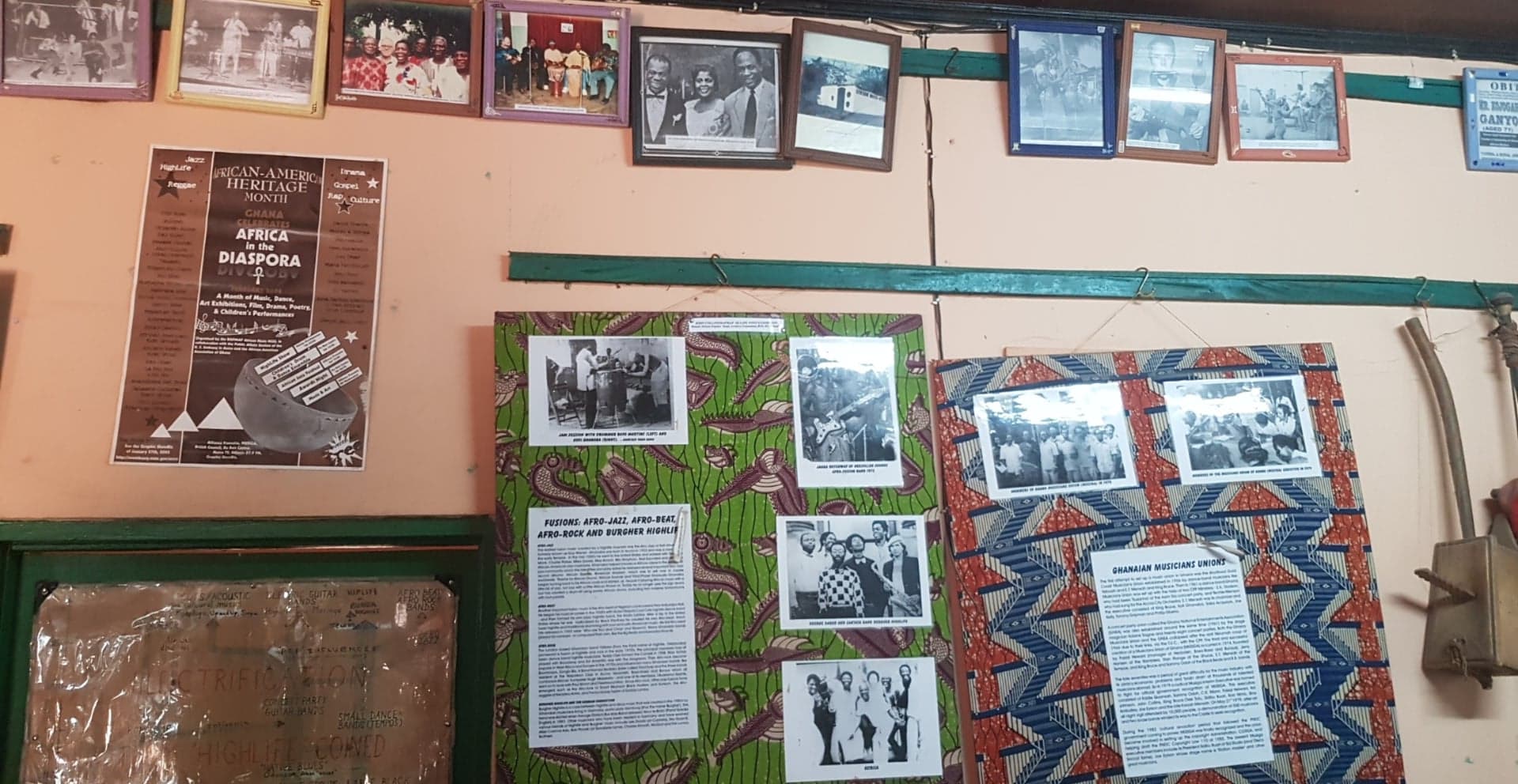
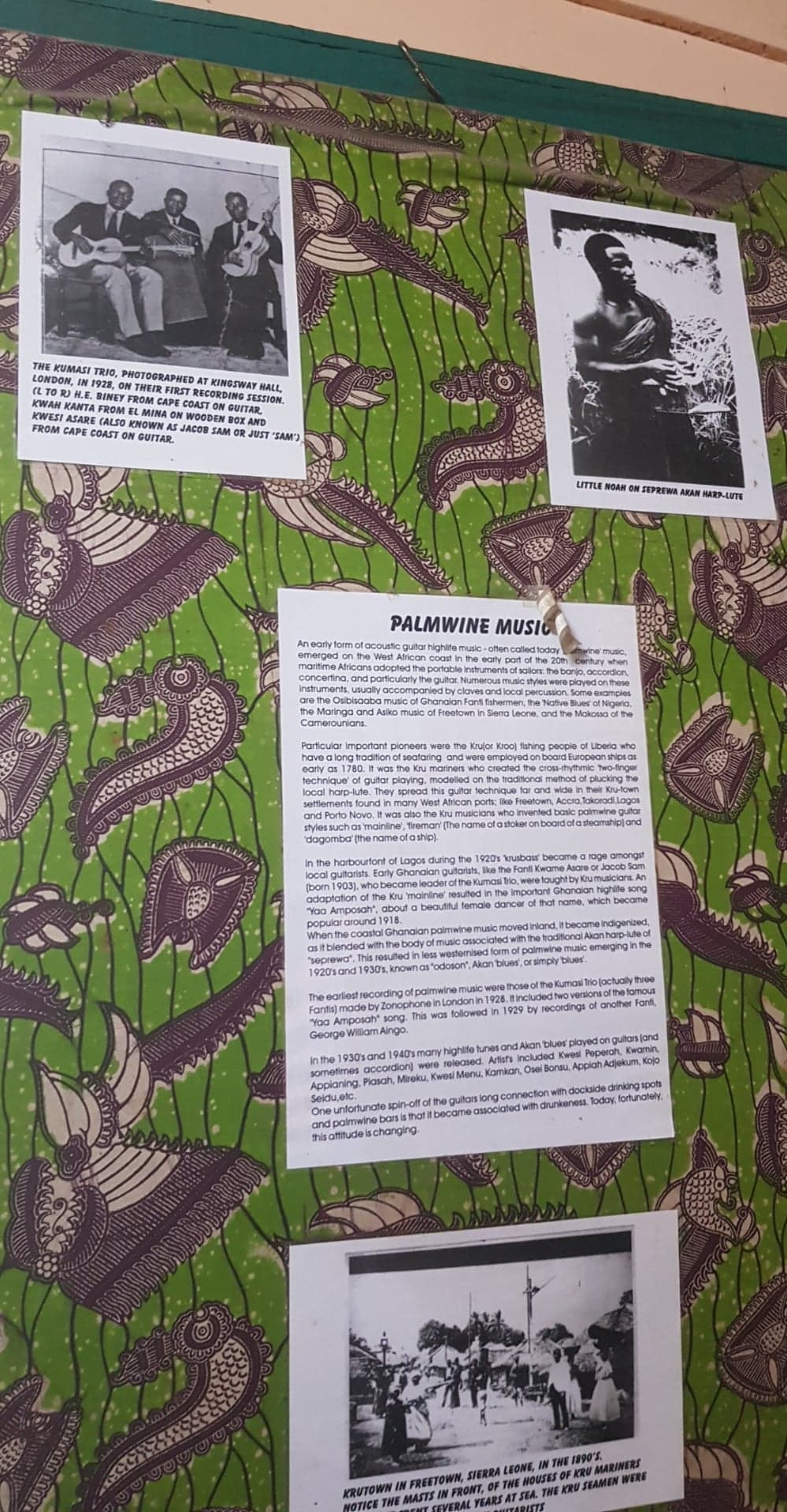
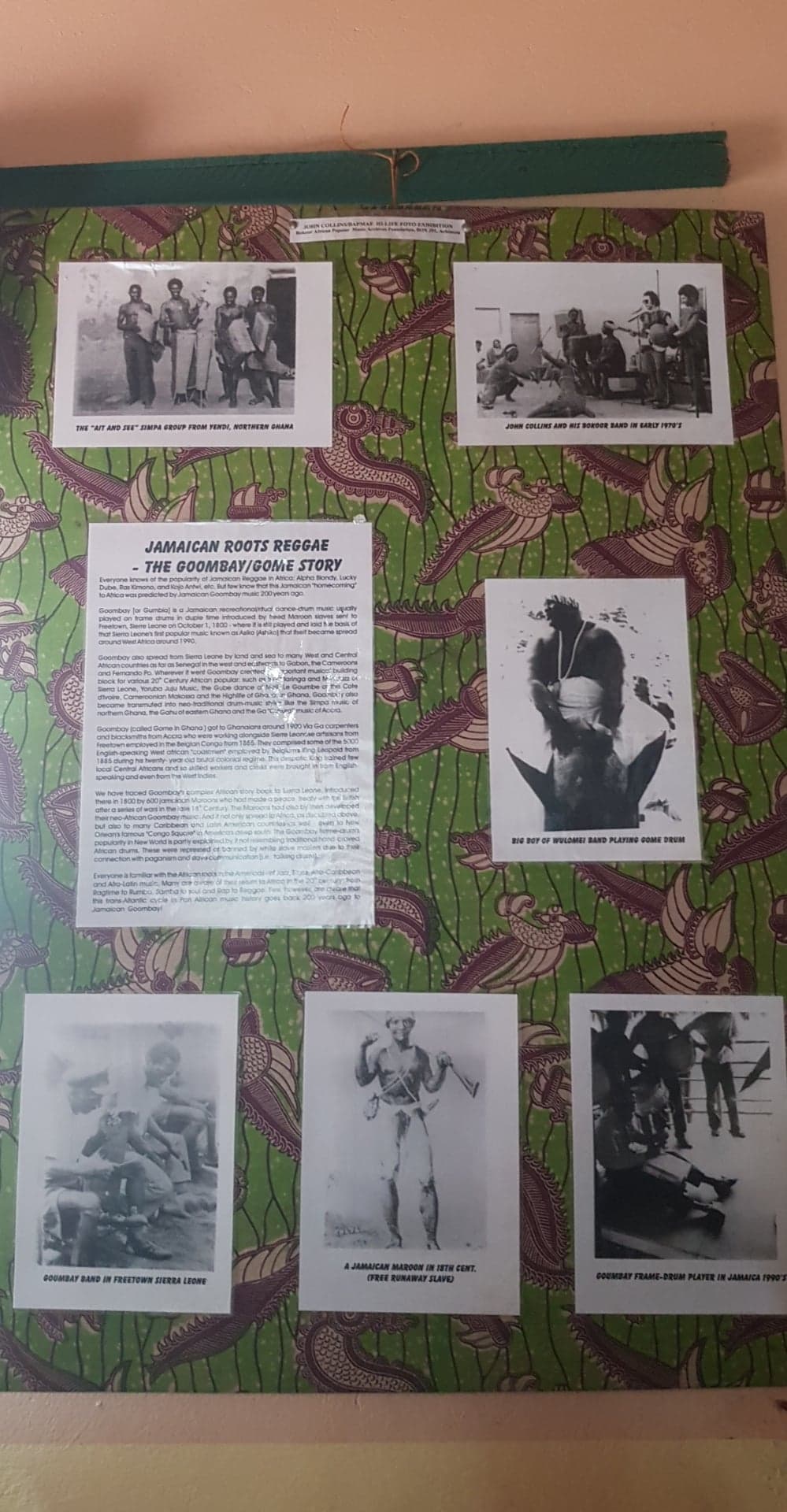
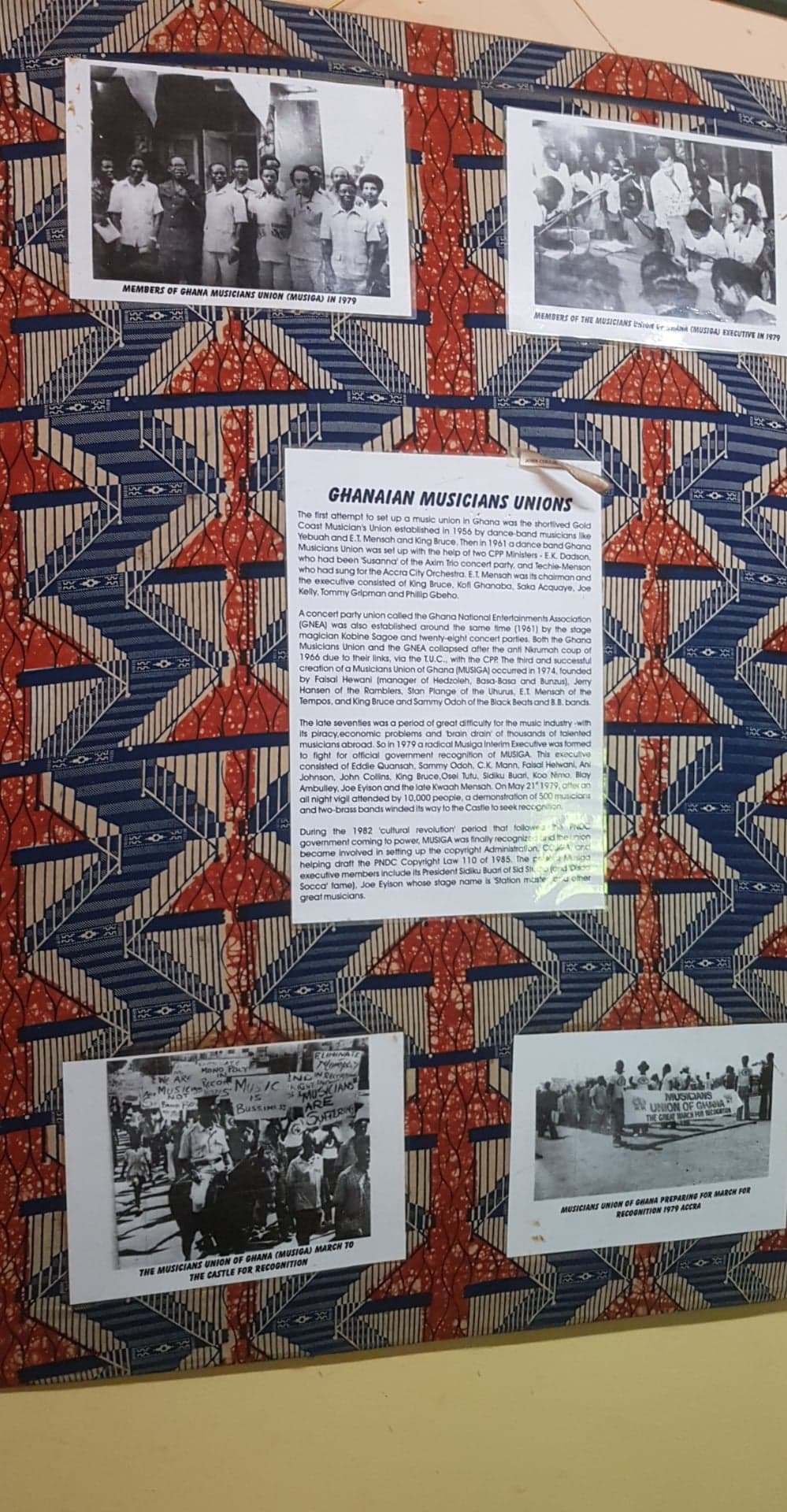
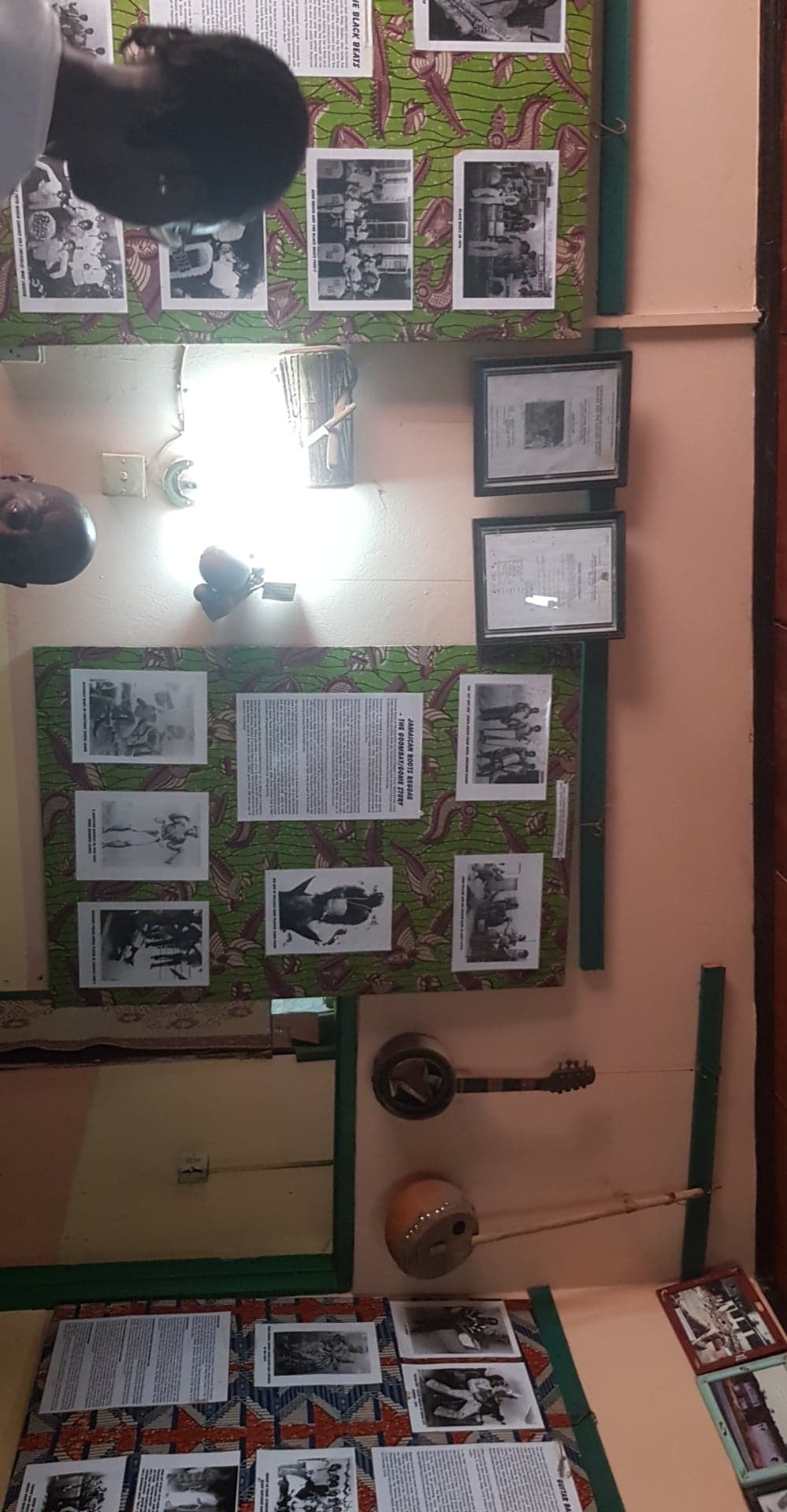
Today, I went to a lecture given by Dr. John Collins, a Historian of Ghanaian music, especially Hiplife. He has turned his house into a museum and seems to be very knowledgeable about the music of Ghana. He is the leading academic in Ghana studying Ghanaian music and has written a lot of books. His lecture on the progression of Hiplife is quite interesting; however, what interested me most I learned about Jamaica’s influence on Ghanaian music. Recently, as I alluded to in a previous blog post, there is a strong presence of Reggae and Dancehall in Ghana. What I didn’t know is that Jamaica has been influencing Ghanaian music for over 200 years (and other countries such as Sierra Leone and Nigeria). Apparently over 200 years ago when Maroons and other rebel slaves were sent back to Africa they brought music a long with them. For example, they brought back a modified drum that is played by sitting on it. Additionally, they brought a folk music called Gome which is still played in Ghana to this day. They also brought the Quadrille dance to Sierra Leone (where a lot of Maroons were deported to after their loss in the Second Maroon war). Quadrille is a traditional Jamaican Dance (and is also danced in other countries such as Dominica and St. Lucia) It was so popular in Sierra Leone that they contested making it the national dance. I find that so fascinating
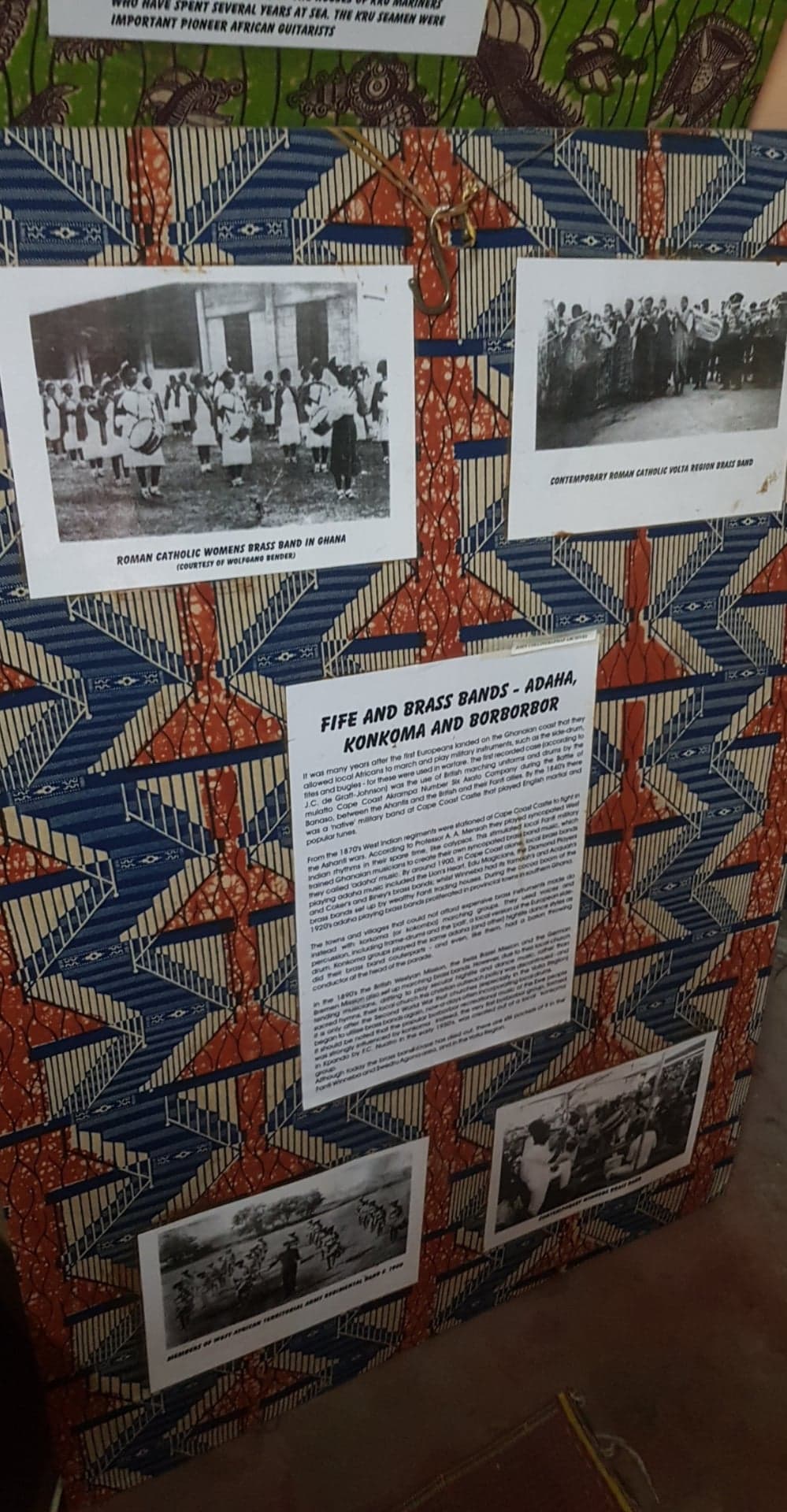
Jamaica’s musical influence in Africa does not stop there. Jamaicans and Trinidadians also brought a certain beat to Africa that is used in the popular Ghanaian music genre Hiplife. During the Ashanti Wars of the 19th century, when the British were trying to conquer the Ashanti for colonization, the British brought people from Jamaica and Trinidad to fight because they were more immune to the diseases and equipt for the climate of the Ashanti region. While there, they were forced to play British marching rhythms on the drums; however, in their free time, they would also played a more syncopated version which was in turn copied by local Ghanaians as it was similar to their rhythms. Not only is it interesting that Jamaica has impacted Ghanaian music but that Jamaicans played a role in Ghanaian history (unfortunately on the wrong side). This is important to me because it shows that apart from just ancestry, Jamaicans and Ghanaians are much more linked than I originally thought. Also it displays that although people we were separated, we were never fully separated and there has always been movement of people and culture between the Americas and Africa.
 Denkyem
Wow this in really interesting. Where did your interesting in music and dance come from, originally? What fascinates you about it?
LikeLike
Music has always been a part of my life honestly. I can’t really pin point where exactly my love o music came from but when I was younger, I would always have my CD player on me before I had an mp3 player. As for dance, it sparked mostly in 8th grade. My best friend at the time, who is Ghanaian, introduced me to a dance called Azonto because at the time I was interested in trends around the world (I had an international music blog and everything). I thought that it was cool and learned it from youtube videos. Then I expanded into other genres, Also, dance is very big in Jamaican pop culture. There would be are new dancehall dances that used to come out every other week. Eventually, dance became my outlet and a bit of a coping mechanism as well. I guess what fascinates me is how different music genres and cultures from across the world influence eachother. Cultural syncretization is something that I always found interesting and music is arguably one of the best examples.
LikeLike